



Making Drupal CMS Truly User-centered


Since its initiation at DrupalCon Portland in May 2024 to the official launch of Drupal 1.0 earlier this month, UX has played an important role leading and guiding the development of Drupal CMS. Contributing to Drupal as the UX Manager at the University of Edinburgh, I have been honoured to have been involved from the beginning and reflect on some of our UX achievements so far.
Instilling UX ethos through the product strategy, Leadership team and Advisory Council
When a new product is initiated, it can be difficult to have a clear view of the User Experience (UX) with so many design and development decisions to be made to get things going. For Drupal CMS, UX was placed as a priority with the product strategy explicitly setting out to build a platform to empower the target user groups: content creators, marketers, web managers and web designers. To drive implementation of the strategy, there has been continued commitment to UX, with Cristina Chumillas as User Experience Lead on the Leadership team and with UX representation from myself on the Starshot Advisory Council.
Defining who Drupal CMS is for, and keeping these people in mind
Drupal CMS seeks to reach non-technical audiences unfamiliar with Drupal, therefore an important focus of the UX track has been to gain a good understanding of these user groups to help drive product and design decisions. Making use of existing data about Drupal personas, the team behind the UX track worked to tease out specific characterisations of the Drupal CMS target audience. We found it helpful to define these using a UX construct called ‘Jobs To Be Done’ (JTBD) – which captures the need, task and underlying motivation, and acknowledging the cross-over between target user groups we grouped these jobs into broad categories called archetypes.
An emphasis on clearer language for Drupal CMS
With the JTBD defined we used UX principles to shape the user interfaces of version 1 of Drupal CMS. Designing wireframes and content modelling we realised the need to minimise use of technical terminology given the product was for non-technical target audiences. Happily, this work linked to an issue I have been leading to open up Drupal’s language and make it less confusing for those unfamiliar with Drupal (known as the ‘Drupalisms’ issue). The motivation behind this issue is to build a controlled vocabulary in Drupal with an associated governance process, to ensure a more consistent and coherent approach to terminology. In the short-term, this means we are paying careful scrutiny to the words used within Drupal CMS, in the longer-term, our goal is for the ongoing development and improvement of Drupal CMS to include considerations of language by default.
UX research on one of the key features of Drupal CMS: the AI Assistants and Agents
One of the most exciting parts of Drupal CMS is the AI included out-of-the-box. In UX, it is good practice to prioritise research and testing of features which carry most uncertainty and to actively investigate areas of unknown. Within the Drupal community, it was widely assumed that the target audience of Drupal CMS would find the AI Assistants and Agents useful and usable, but it was important to test this by carrying out research with real people, representative of the non-technical user Drupal CMS was intended for. Through a series of successive tests, I was able to learn lots about how people expected the AI features to work and how they wanted to interact with them. Feeding this data back to Jamie Abrahams and the team at Freely Give, quick iterations and improvements could be made to ensure the AI features became more and more user-centred.
Reflecting on our UX achievements over the past eight months, I am very proud of what we have achieved for Drupal CMS. Moreover, I have been thrilled to work with Cristina Chumillas, Pamela Barone, Jamie Abrahams, Megh Plunkett, Ralf Koller, Thomas Howell, Lewis Nyman and many many others to ensure Drupal CMS remains user-centred. There’s a saying in Drupal that the drop keeps moving which aligns with the ethos of UX: you’re never quite done, there is always room to make things a bit better and I am motivated and excited to keep going!
Read about my previous Drupal work in my posts on the University of Edinburgh blog: https://blogs.ed.ac.uk/website-communications/category/drupal-ux/
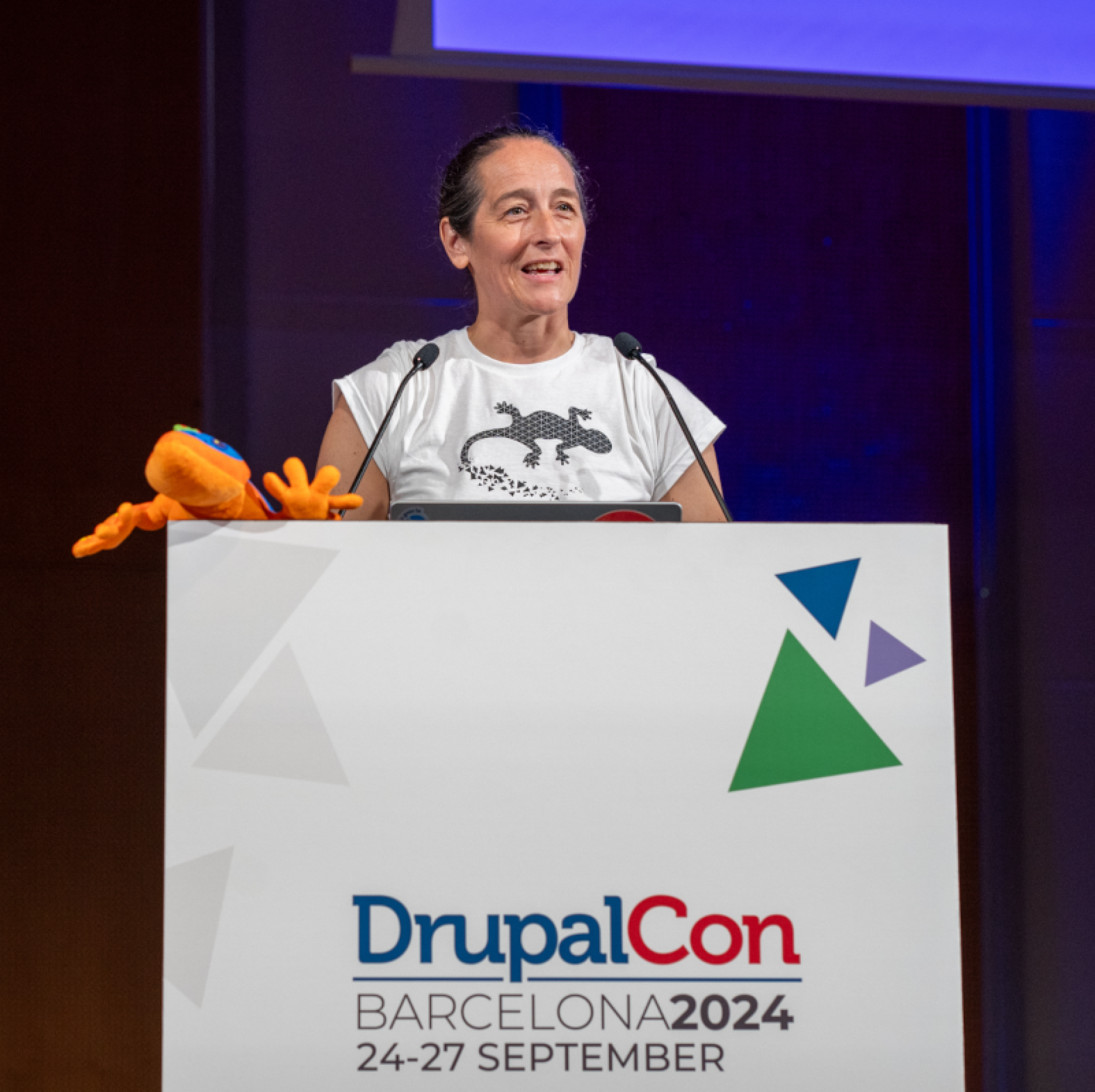
 Emma HorrellAlways speak publicly in the presence of an orange lizard
Image Attribution Disclaimer: At The Drop Times (TDT), we are committed to properly crediting photographers whose images appear in our content. Many of the images we use come from event organizers, interviewees, or publicly shared galleries under CC BY-SA licenses. However, some images may come from personal collections where metadata is lost, making proper attribution challenging.
Our purpose in using these images is to highlight Drupal, its events, and its contributors—not for commercial gain. If you recognize an image on our platform that is uncredited or incorrectly attributed, we encourage you to reach out to us at #thedroptimes channel on Drupal Slack.
We value the work of visual storytellers and appreciate your help in ensuring fair attribution. Thank you for supporting open-source collaboration!

ASK: Drupal Community Needs Your Support
View all →
Note: The vision of this web portal is to help promote news and stories around the Drupal community and promote and celebrate the people and organizations in the community. We strive to create and distribute our content based on these content policy. If you see any omission/variation on this please reach out to us at #thedroptimes channel on Drupal Slack and we will try to address the issue as best we can.

Related Drupal Initiatives

Related Organizations

Related People


You may also like