



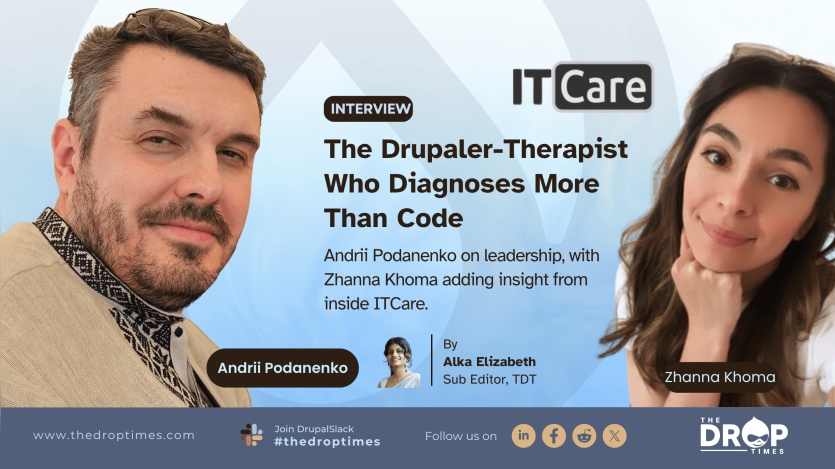
The Drupaler-Therapist Who Diagnoses More Than Code

“I like to 'grow' more than 'I grow'. That's the actual value of being a mentor, that I'm not limiting whoever I train or whoever I teach, I'm not limiting them with my knowledge. That's not the correct way of being mentor. I'm inspiring people. I'm helping people to grow. And then I'm I learn from them. That's my goal.”
This is how my conversation with Andrii Podanenko and Zhanna Khoma concluded. It was a simple statement, but it summed up everything that came before it. Growth through community. Mentorship without ego. A commitment to learning that runs both ways. What began as a discussion about Drupal became something much broader: a reflection on technology, leadership, and what it means to build with purpose.
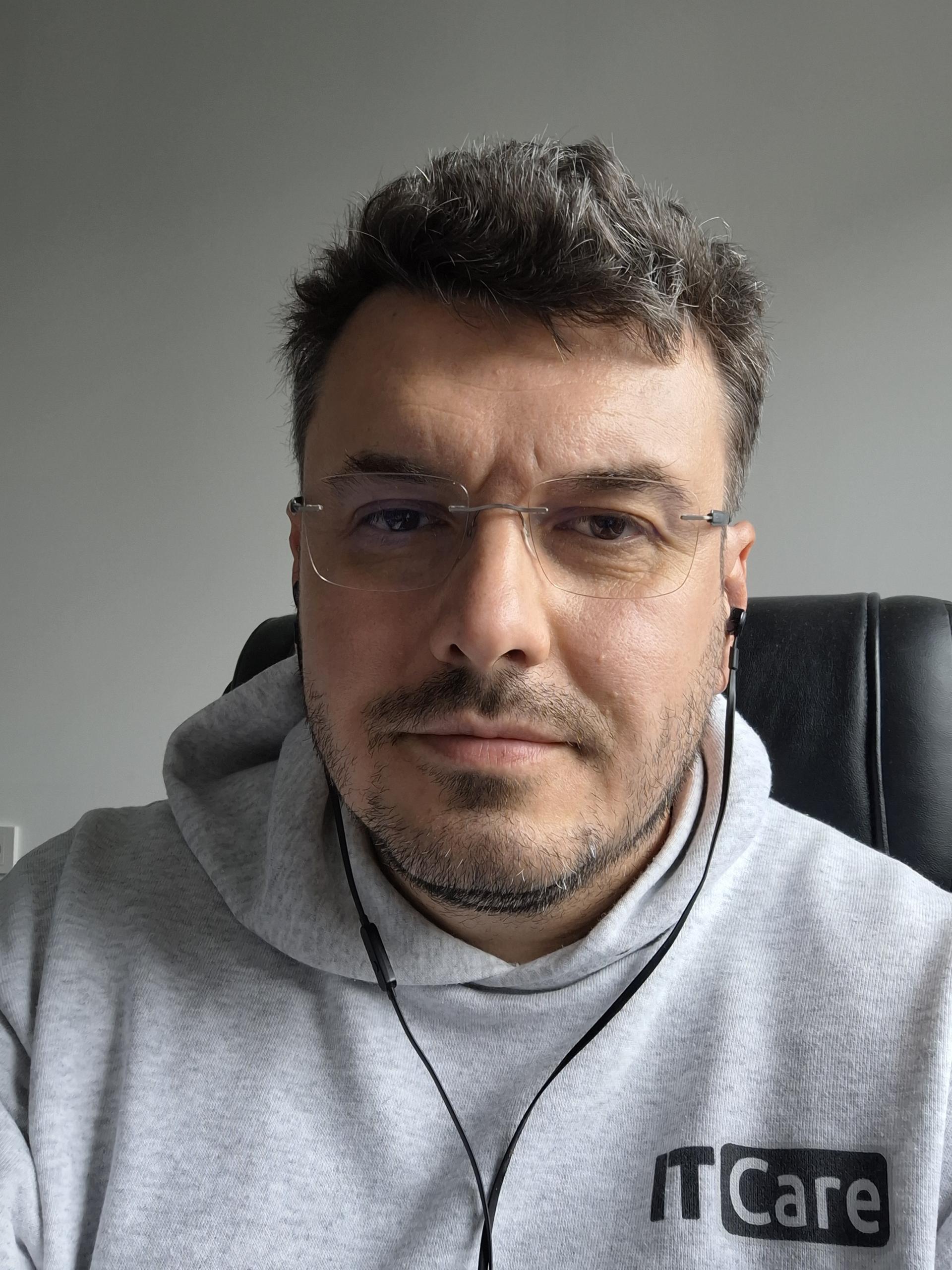
Andrii Podanenko is the CEO and CTO of ITCare LLC and a longtime contributor to the Drupal ecosystem. In this interview, he was joined by Zhanna Khoma, Project Manager and PR & Communications Manager at ITCare. Over the course of our conversation, we talked about how ITCare blends R&D with real-world user needs, how they are weaving AI into Drupal with intention, and how personal experiences, from psychotherapy to wartime displacement, have shaped their philosophy and practice. I am Alka Elizabeth, Sub-editor at The DropTimes, and this is their story.
TDT [1]: How did you first encounter Drupal? What drew you to it back in 2007, and how did you become part of the community? You've been on Drupal.org for over 18 years now—almost two decades. How did your roles evolve over time, and what made you stay?
Andrii Podanenko: Yeah. So I started actually earlier than my profile at drupal.org says. So my personal counter starts from 2002. In 2008, I started to become kind of an active Drupal community member, where I registered on the site and started to contribute, translate. And initially, I was a freelancer. It was my side job, helping people to spin up new websites. I was deciding between some platforms that I could use in my long-term journey. I tried multiple solutions back then. One of those was WordPress, but I didn't like it. Then I tested Drupal. I hated it, and after some time, I returned to Drupal as a community member.
Initially, I started with translation. It's my personal preference. Usually, when I try to get into new technology, I always look at the localization. How good the product is for myself personally, for my local community. Could it be shared with the local community, and how is it working in the international space?
So back then, I translated almost alone. I translated Drupal into the Ukrainian language. Since then, we are one of the top contributors in terms of translations. Ukrainians always were the fastest group to adapt to new versions of Drupal, etc. And I chose Drupal because it's very modular, and it can fit almost any project, not only web-based but also for automations and so on.
TDT [2]: That's how you got introduced to Drupal. How about the Drupal community? Besides the web pack, where did you first get a sense of the Drupal community?
Andrii Podanenko: Yeah, in 2008 or 2009, we organized the first local Drupal Ukrainian BarCamp.
In 2009, it was the first Drupal Camp in Ukraine, and since then, every year, we were organizing camps not only in Kyiv but across the country. Ukrainian camps became some of the largest, with some having more than 500 attendees.
From a community perspective, I mean building the community inside the country but also contributing back to the wider Drupal community. Ukrainians were the group of people who made it possible for Twig to be integrated into Drupal core back in Drupal 8.
TDT [3]: When I was going through your profile on Drupal.org, I noticed you've spent quite a bit of time on documentation. Right now, documentation is like the unsung hero of open source. What principally guided you in improving the core Drupal documentation?
Andrii Podanenko: Two things. First, as I said, from a translation and localization perspective, in order for us to be able to find important human resources in the community, we need to educate people. We need to educate ourselves, and we need to educate our customers. So documentation plays an important part in that regard. How we create documentation right now is that with every project, we also ship documentation, very specifically localized to the shape that we built with Drupal.
Yes, there is generic documentation. We took part in building Drupal guidelines, multilingual guidelines that are available on Drupal.org, as well as the wiki that is on Drupal.org. We are also polishing some articles and adding documentation about projects that we maintain.
But overall, our major effort in terms of documentation right now is to provide documentation for the specific distribution or the specific build based on Drupal. Because when you send customers to generic documentation, it's too technical for them.
Customers usually need more specific documentation. Our latest decision was to inject documentation inside the user interface of the Drupal admin. Inline documentation plays a big role. When people struggle with a form, they open a modal window with an embedded video or something like that, and they follow that video tutorial. So I don't have too many documentation edits on Drupal.org because, as I said, we usually ship documentation inside the projects.
But overall, Zhanna can even tell more. That’s a very important part of the Drupal journey to periodically send the latest updates to the documentation and tutorials to customers to keep them engaged.
Because it's one thing when Drupal bumps the version from Drupal 10 to Drupal 11. It's another thing to explain to non-technically savvy people what was actually shipped, what benefits they can get from this specific version, what benefits are not relevant to them, and what are relevant. So that's the part we usually handle with documentation.
Zhanna Khoma: About documentation, I just want to add that currently, we not only write documents but also create video tutorials for our clients. And also, it could be training sessions. So that works best. Our clients actually prefer video tutorials. It helps them go step by step, and they can do everything with the video lesson. It works better than just reading a document.
TDT [4]: From system architect at the YMCA of the USA to CTO and now CEO of ITCare, you’ve held roles in development, architecture and sales. How have those experiences shaped your leadership in the open source world?
Andrii Podanenko: That's really a question we could talk about for hours, but I’ll try to keep it short. I started my professional career in Drupal as a senior developer in an international company, and then moved into team and technical lead roles. We built our dream team in that company, and many people from that team later created their own companies.
That was one part of the journey that shaped my role as a mentor. I realized that when I invest in people, in human resources, in educating and helping them grow, it also helps me grow. It helps me see business and community from different perspectives.
Another thing is that my personal career developed naturally. I moved from role to role based on customer needs. I ended up becoming the seller of my own company. In the YMCA community, we are now creating one of the biggest Drupal-based distributions, simply because of their desire and need. It is a large community, and they usually are not technically savvy.
That is why we organized a company, to help them as both a service provider and a product company. Now we are expanding into hosting and even AI because that is what the market requires. That is how my roles have changed.
If I invest in people and educate them, and if we invest in educating our customers and ensure not just technical knowledge but also ownership of the product that aligns with their goals, then we all move toward a brighter future.
TDT [5]: You moved from Gestalt psychotherapy to the web world. What happened there?
Andrii Podanenko: It's not what happened. It's my secondary profession.
So that's actually a pretty good profession for the modern world, especially speaking of AI. When we talk about prompt engineering and building these complex solutions, my psychotherapy background really helps me shape proper requests and proper prompts.
What helped back then was that I started from just personal psychotherapy. Then I began to grow as a professional psychotherapist.
Right now, this really helps me build a team, to ensure that we have a healthy climate within the group, where everyone is comfortable with each other and we are not burning out.
But it's not like a spine. It's not the main thing. Psychotherapy is like a sauce.
It helps us deliver better. And it actually helps a lot in sales, because the empathy developed as a psychotherapist helps a lot with understanding customers, with understanding their needs. And the more clarity you have in that regard, the better and higher quality product you can deliver and help the customer.
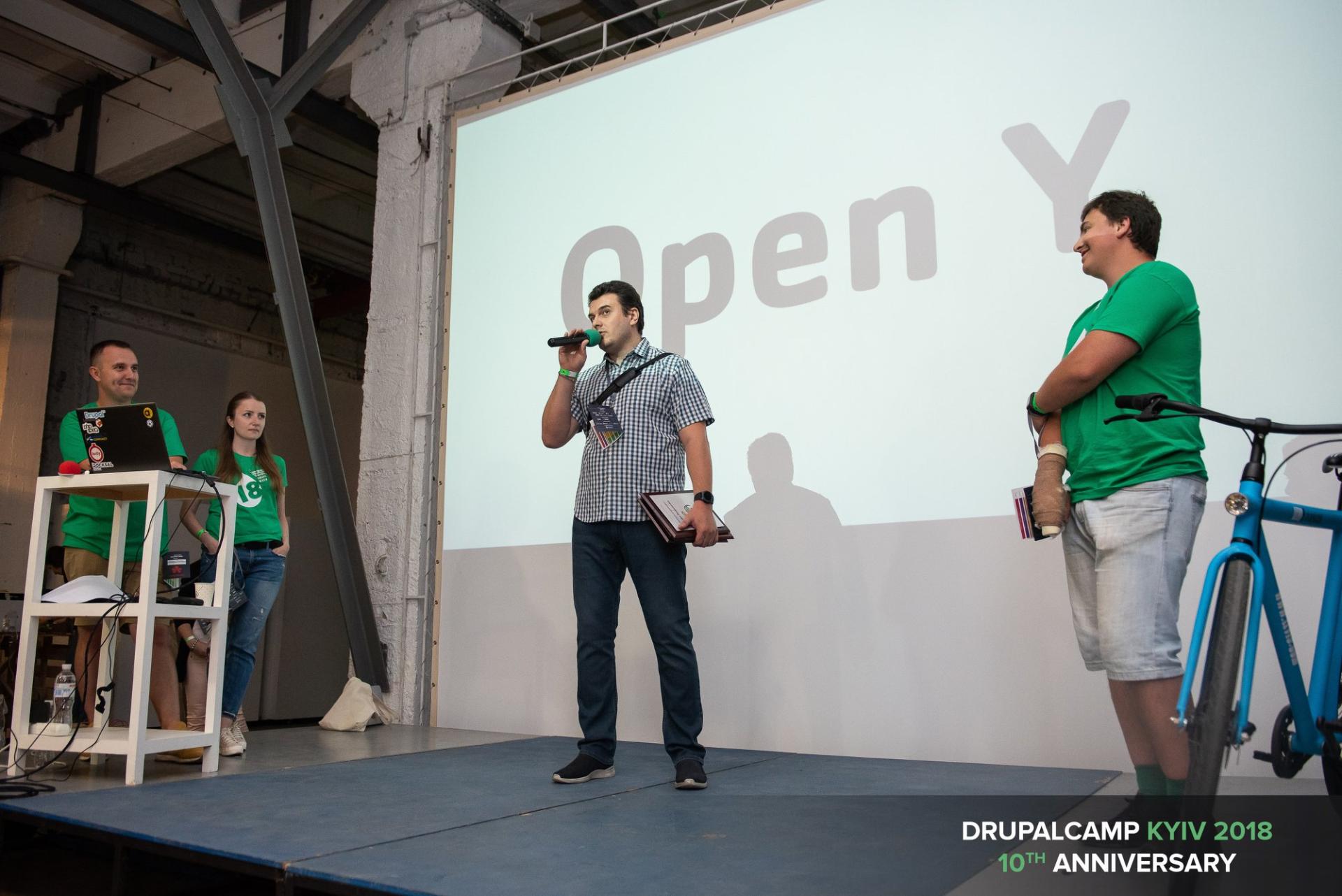
TDT [6]: You mentioned that practicing Gestalt psychotherapy has helped with your interaction with AI. Can you briefly elaborate on that? Is it because the way you perceive AI is different? Do you have a different understanding of AI behavior, the biases it creates, and the human-in-the-loop framework?
Andrii Podanenko: Yeah, so there is the so-called field theory in psychotherapy, which explains everything that is around us. Modern AI models behave like field entities. One of the studies I do personally involves multi-entity chats with AI, where it is not only I and AI, but multiple entities in the chat.
Each entity has its own purpose, like engineer, pragmatist, developer, child, etc.
By using this knowledge or practical experience from psychotherapy, specifically a technique called the Hot Chair, I can shape the thinking of AI to behave the way we need. This helps reduce hallucinations and glitches. For example, when solving tough architecture problems in Drupal, you do not need the experience of reading books—you need an engineer's mindset.
By building these structures, prompts, or scenarios inside AI, it helps you create better code. That is how, sometimes using multi-entity setups in AI, we can solve difficult technical problems like debugging issues.
For instance, if we are building a product for the birth community, which we did in the past, architectural thinking is not as helpful. You need input from someone with biological experience.
So I use my psychotherapy knowledge to shape those entities inside the chat and ask them to answer questions. This gives me really good answers. Zhanna has seen some of the work I do. I do not think I explained it very well, because I believe I need to do more public explanations of what I do. But overall, it helps us work with better quality, I should say.
TDT [7]: Andrii mentioned that bringing more empathy into his approach has helped him in teamwork and in his interaction with AI. From a team or company perspective, how have you benefited from that? Do you have an example? Has it improved team morale or had some other kind of impact?
Zhanna Khoma: Yeah, I think Andrii is right. Psychotherapy helps him a lot, and it also helps in building the ITCare team. We don't really have strict rules in our team, but we do have a good team culture. Everyone knows their role, what they are doing, and why they are doing it.
Our goal is the same: to make our customer or client happy and to do everything we can at that point. If I am a developer, I know what my role is. If I am a project manager, I do what I need to do. If I am a PR manager, the same applies. But it's not just about the job titles.
I started at ITCare as a PR manager, and now I have moved into a project management role as a backup. In our team, we can switch roles. If someone needs a day off or something happens, we can help each other in different positions. So we can wear different hats.
TDT [8]: As CEO and CTO of ITCare, what is your vision for the company? And in the recent period, is there any specific milestone that you are particularly proud of when it comes to the company?
Andrii Podanenko: Yeah, so our vision, and I should say it is not only my vision, it is our vision, is to shape ITCare as a research and development company.
We want to do this with the help of Drupal, but not only Drupal, because our technology stack is broader. Drupal is the technology that helps us deliver a web-based stack.
Research and development help us generate ideas based on trends. We can be really good developers and contribute back to Drupal a lot, but without research, without looking into the future and trying things through trial and error, I do not think it is possible to build a good company.
A lot of our ideas come from our customers, not only from their pain points but also because of the transparency we have as part of our company culture and partnerships with them. They share with us really good problems, ideas, and challenges that help us deliver projects, solve issues, or accomplish specific goals.
That, I believe, is the real goal of our company. Zhanna, correct me if I am wrong or if I missed anything.
Zhanna Khoma: No, I think all is great.

TDT [9]: Do you have any recent milestone that you are particularly proud of when it comes to the company?
Andrii Podanenko: Definitely, the distribution that we built on Drupal is a huge milestone, and it is still ongoing.
With a pretty small team and in partnership with other core team members, I mean other agencies, we were able, in a short amount of time and with a stretched budget from the YMCA community, to build the biggest Drupal distribution.
It has around 500 modules inside. This distribution is the biggest one I know of based on Drupal. It started its journey in 2017 and is still active, still playing a significant role in the YMCA community.
With this distribution, we are also helping the wider Drupal community by contributing features, fixing bugs, and helping to make the latest versions like Drupal 11 more stable and reliable.
TDT [10]: Beyond Drupal, you have supported many other open source projects. How do you decide which initiatives to back? Do you go based on common interest, or what value do you find in cross-project collaborations?
Andrii Podanenko: Well, I guess it's two things.
First is passion. For example, we found Zhanna. She was never a project manager. She was a teacher, I think, from school. But I saw the passion. I saw the mindset that helps us build a better future for our team.
After maybe half a year, she became a project manager and PR manager without any issues, just because we are looking for people who are eager to learn and eager to grow. That is one of the keys.
The second thing is definitely what customers need. We can dream a lot, and we do dream a lot, but if those dreams are not aligned with customer needs, they do not mean anything.
As I said, and I will repeat this multiple times because it is important to us, a lot of ideas and a lot of really great products are born because customers need them.
We, as technically savvy people, can create almost anything. But it should be connected to real-world scenarios and real-world use cases. Where before there was a struggle or a long journey, after the solution it becomes more automated and people can focus on what they want instead of what they must.
TDT [11]: Based on our conversation so far, it seems clear that ITCare and its team prioritize the user. You work with the intention to learn from the people who use your products.
I would like to ask, and we can skip this if it is not appropriate, you are a Ukrainian citizen who has experienced difficult events, including the displacement of your family. Do your empathy, your passion for the community you work with, and the people you serve reflect those personal experiences?
Andrii Podanenko: Yes, definitely. Before the full-scale war, I was more like a dreamer. I was dreaming a lot. Now I have a more pragmatic mindset. It helps me focus more on specific projects, specific ideas, specific deliverables, instead of starting multiple projects and not finishing many of them. I am not saying that the way I worked before was bad, but now the speed at which we deliver solutions has changed. We can build something useful in a shorter time frame, instead of relying on theoretical approaches. We usually focus on getting practical results sooner rather than later. That is the major shift. It is hard to explain how and why, but overall, it is much clearer now that when we make the lives of our customers or community members easier, faster, and less stressful, we create better products that fit real end user needs.
Zhanna Khoma: Yeah, actually, I started my way in 2022 at ITCare, so it has been three years already in this company. As Andrii said, before this I was a teacher. I lost my job, and that is why I am here now. For me, I did not relocate. I live in my city, in my house, so nothing changed for me like it did for Andrii. He relocated with his family to a different region. I live in the western part of Ukraine, so it is quieter here than in other regions. But my life has changed a lot over these three years. I am not saying it is bad, just different.
Andrii Podanenko: You know, to add to this, I believe that we have become more transparent now with our customers and our partners. We value more of what matters. One principle we really embrace is "fail fast."
If there is a perception or an idea, instead of overengineering or overthinking, we tend to build something small, quick, and simple to validate that idea immediately. We value this principle more now because we have only 24 hours in a day, and any day could be our last. Sorry to put it that way, but our environment dictates this principle.
TDT [12]: The Drupal Ukraine community has hosted some of the biggest camps, with more than 500 participants. You have been mentoring emerging developers within that community. The situation has changed, and things are not the same as before. What strategies have you found effective in helping people who want to join the community and learn more about Drupal?
Andrii Podanenko: For us, and still for many others, it is not about expecting people to come in fully ready. I do not think there is a country in the world preparing developers who can jump into the Drupal community right away with senior-level development skills. That is just not the case.
Even when I started with Drupal, the principle was and still is, "come for the code, stay for the community." We know everything about code, but that is not the focus. The focus is the community. Community means communication.
Our biggest strength in the Ukrainian community is that we value questions. We try to find answers to those questions. When someone is new or less experienced, whether a developer or not, we encourage them to ask. Drupal is not only about developers. Zhanna is not a developer, but she is an active part of the Drupal community. She was able to grow because she asked a lot of questions, and we gave her answers.
In our community, we have a lot of chats and local groups where people still ask questions and get answers. That is the most important thing. When people receive answers, they grow. And someone has to be there to answer those questions.
We try to build a culture that avoids blaming or shaming anyone for not knowing something. Instead, we focus on explaining again and again if needed. That is how people grow. That is even how AI grows. The more quality input you give to AI, the better output or questions you get in return. The same principle applies here.
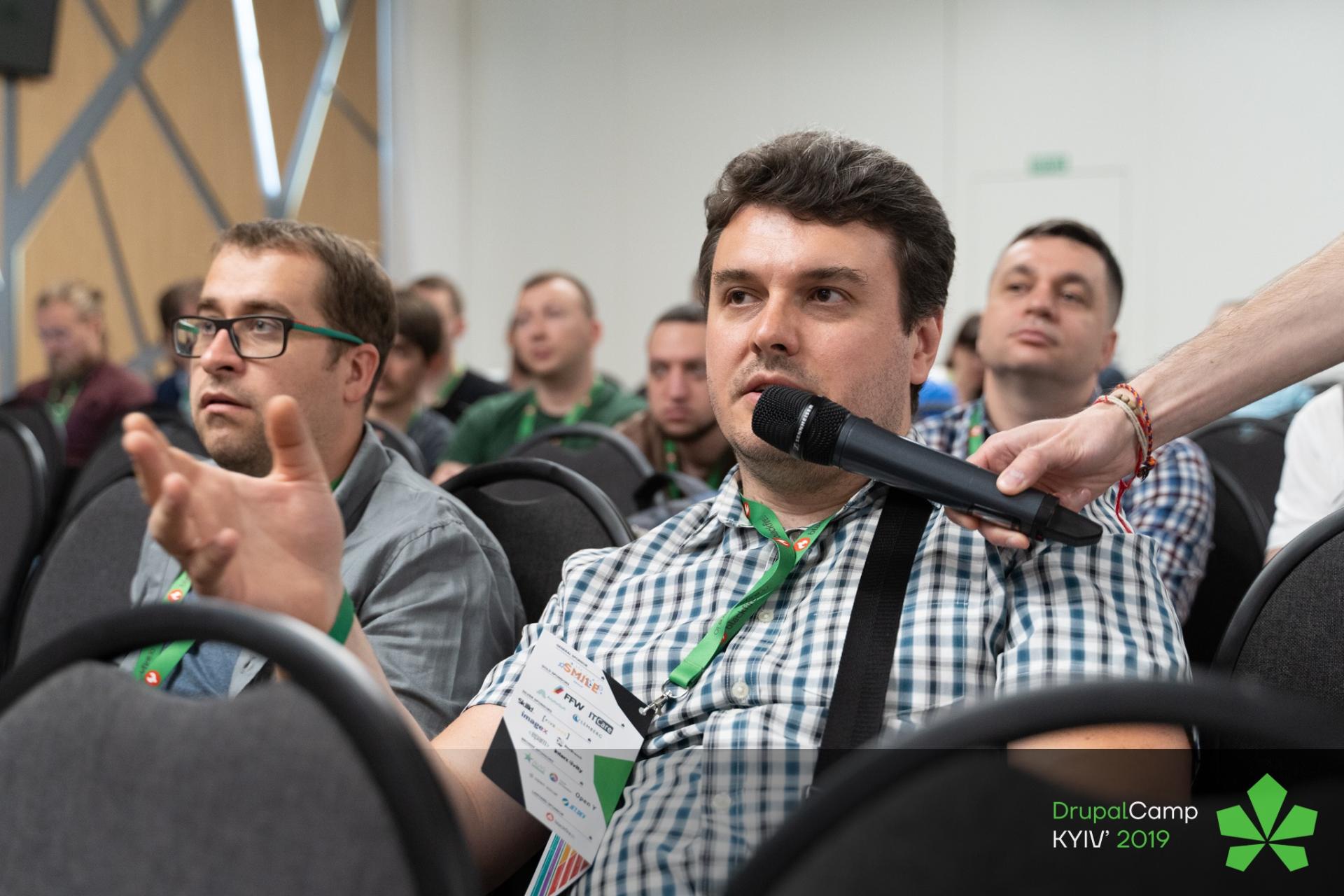
TDT [13]: How are you integrating AI into Drupal projects at ITCare? What major changes or impacts do you expect this integration to bring to the organization?
Andrii Podanenko: The first thing is that now there is a greater need for every person to spend more time on learning and education. Previously, if I wanted to get information in Japanese, I had to invest a lot of time translating and building search queries in that language. It took a lot of effort. Now, with AI, localization is easy. I can research deeply in any language or field, in any business market I need. That is a big shift. No matter where you live, you now have access to this kind of knowledge.
Another key requirement is critical thinking. But with skilled developers and partners, this can be developed over time. AI is also changing how we look at Drupal. We are no longer limited to PHP. Language is no longer a barrier. If you understand architecture patterns and design principles, which are shared across many technologies, you can work in multiple stacks. We are now growing not only in our depth of Drupal knowledge but also in how we integrate Drupal with other systems, even those that used to be too challenging.
Automation has also become more accessible. For example, we use AI in migration projects. We rarely use AI to generate content because the quality is still not good enough. People can easily tell when content is fully AI-generated. However, when it comes to document retrieval or reshaping existing content, that is where we use AI effectively. Drupal’s AI infrastructure helps with this a lot.
Frankly, I do not know of any other product the size of Drupal that integrates with AI as well as Drupal does. You can easily hook Drupal up as an MCP server to your AI agent and start using all your content, database, and integrations directly in your prompts and workflows.
At this point, the conversation is no longer about whether you can use AI with Drupal. It is about what specific problems you are facing. We now ask our customers not whether they need AI, but what struggles or repetitive tasks they have. Once we identify those, we explore how we can use AI and Drupal to automate those processes, so our clients can focus more on engaging with their users and improving their business or daily operations.
TDT [14]: You have argued for self-hosted national language models to maintain the sovereignty of information. What technical and ethical challenges do you think organizations should be prepared to face if they follow this approach?
Andrii Podanenko: Actually, this idea came from real challenges. We found that when we try to process customer content, or even our own, using the state-of-the-art AI models from major companies, there are many embedded ethical rules. Sometimes, those rules end up altering the meaning of the original content, which becomes a serious issue.
Many clients explicitly say they do not want their content changed. They want it reshaped with precision, but without distorting the original meaning. The issue is that some models, like OpenAI, Gemini, and others, cannot fully meet that expectation because of the rules and constraints coded into them.
That is why we argue for self-hosted models. If the task is very specific, you do not need a massive large language model. Those are expensive to run and often unnecessary. You need a smaller, more targeted model trained for your use case. This thinking actually mirrors the Drupal mindset. Drupal is not monolithic. There is a core, but by itself, it is not enough. You usually add 100 or more modules and configure it to your specific needs.
Similarly, large language models try to do everything. But in most technical cases, you do not need everything. You need something specific. This is where open source becomes powerful. If you look at the Hugging Face community, it functions similarly to the Drupal community. You can find small models that are trained for tasks like manipulating HTML or working with medical content.
With our background as Drupal developers and business professionals, we help clients understand that for their particular task, they can take a small model, retrain it on their own data, and get exactly what they need without running into unexpected political or ethical filters from the big models.
We are working to educate non-technical customers with this knowledge so they can focus on their actual needs. It should not be about ticking a box that says "AI powered." The question we ask is: why do you need AI here? That usually leads us away from using massive language models, and instead toward more efficient, purpose-built solutions.
TDT [15]: You experiment with Gemini-based AI and embrace its anomalies to create multiple AI personas. What inspired that approach, and what advantages have you seen compared to using a single-agent model?
Andrii Podanenko: The reason I am working on the idea of multiple AI personas is closely tied to what I mentioned earlier about localized language models. In order for a product or a user to get the most predictable and useful results, you need a persona that is shaped around the right knowledge. That gives you the best answers.
For example, if you ask a doctor about Drupal, you might get an answer, but it will probably be low quality unless that doctor also happens to be a Drupal contributor. By shaping specific personas in the AI context, the quality and precision of responses improves. Instead of hallucinating or blending in unrelated information, the system gives more accurate, relevant, and direct answers.
I have even trained my own AI not to guess when it does not know something. I want it to say, "There is no answer," rather than make something up. Large language models try to answer everything, but they do not always maintain high quality across every field. With personas, the system becomes more focused and reliable.
I have around 26 personas I work with: freedom, the pragmatist, wisdom, life, the child, the creator, the shadow, the supervisor, the engineer, and so on. If I am solving an engineering problem, I consult the engineer persona. If I am working on something for sales, I do not ask the engineer, because engineers are not typically good at sales communication.
The idea of personas is inspired in part by psychotherapy, physics, social studies, and similar fields. The more we segment AI capabilities, the better results we get within each specific area.
 Alka ElizabethMy puns are intended.
Image Attribution Disclaimer: At The Drop Times (TDT), we are committed to properly crediting photographers whose images appear in our content. Many of the images we use come from event organizers, interviewees, or publicly shared galleries under CC BY-SA licenses. However, some images may come from personal collections where metadata is lost, making proper attribution challenging.
Our purpose in using these images is to highlight Drupal, its events, and its contributors—not for commercial gain. If you recognize an image on our platform that is uncredited or incorrectly attributed, we encourage you to reach out to us at #thedroptimes channel on Drupal Slack.
We value the work of visual storytellers and appreciate your help in ensuring fair attribution. Thank you for supporting open-source collaboration!


ASK: Drupal Community Needs Your Support
View all →
Disclaimer: The information provided about the interviewee has been gathered from publicly available resources. The responsibility for the responses shared in the interview solely rests with the featured individual.
Note: The vision of this web portal is to help promote news and stories around the Drupal community and promote and celebrate the people and organizations in the community. We strive to create and distribute our content based on these content policy. If you see any omission/variation on this please reach out to us at #thedroptimes channel on Drupal Slack and we will try to address the issue as best we can.
Related Organizations
Related People
You may also like