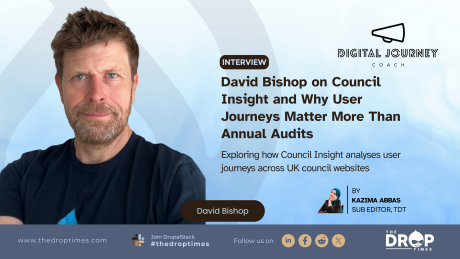




David Bishop on Council Insight and Rethinking How UK Council Websites Are Evaluated


Council websites are often discussed in terms of scale, compliance, and platforms. Yet, they are ultimately shaped by everyday journeys: a resident searching for information, choosing a result, and hoping the page they land on addresses a specific need. Council Insight is built around that reality. Developed by David Bishop, founder of Digital Journey Coach, the tool analyses how journeys unfold across 392 UK local authority websites, covering 4,707 individual user journeys and assessing whether published content supports users as they progress.
The project is built using open-source software, including Drupal, PHP, Ollama, Mistral7B, RabbitMQ, HAProxy, and Linux, and operates by orchestrating large volumes of AI-assisted analysis. David said the work involved coordinating over 40,000 AI conversations across those journeys, which proved more complex than he initially expected. Some reports were still in progress following the first release, but Bishop said he believes the project demonstrates that this kind of journey-based analysis at scale is achievable. He also acknowledged the role of his wife and business partner, Lydia Bishop, noting that while he built the engine, she made it usable.
David announced on 14 October 2025 that the first version of Council Insight was live and available, describing it as free to use and inviting feedback from content designers and web managers working in UK local authorities and elsewhere. To better understand the thinking behind the project, its origins, technical foundations, and intended use, Kazima Abbas, sub-editor at The Drop Times, connected with David to discuss Council Insight in more detail.
TDT[1]: Let’s start with the core: Council Insight is now live and analysing more than 4,700 user journeys across 392 UK council websites. What problem were you solving when you began this project, and how has the vision evolved now that it’s in the hands of content teams?
David Bishop: The idea started while chatting to the Drupal AI initiative team at the international AI Summit in London, where Drupal had a stand. For the past few years, I have been working with local authorities in the UK on an on-and-off basis to support web teams with digital transformation. I was aware that one of the biggest challenges in this space is creating accessible editorial content on council websites.
There are automated web accessibility tools available, and there have been national schemes to audit all local authorities and provide best-practice reports. However, these reports are typically run annually and require a lot of effort to produce.
I saw an opportunity to combine automation and AI-driven chat-based reasoning to design a journey-based assessment that would help website content design teams be more efficient. There is always more work to be done than council web teams can afford to resource; the idea was to create a tool that can be used to support daily work, not just provide an annual audit.
TDT[2]: You’ve emphasised that Council Insight mimics the real way people use websites: starting with a search, identifying a need, and seeing whether the content actually delivers. What does that journey analysis look like under the hood, and why does this human‑centred flow matter so much to your approach?
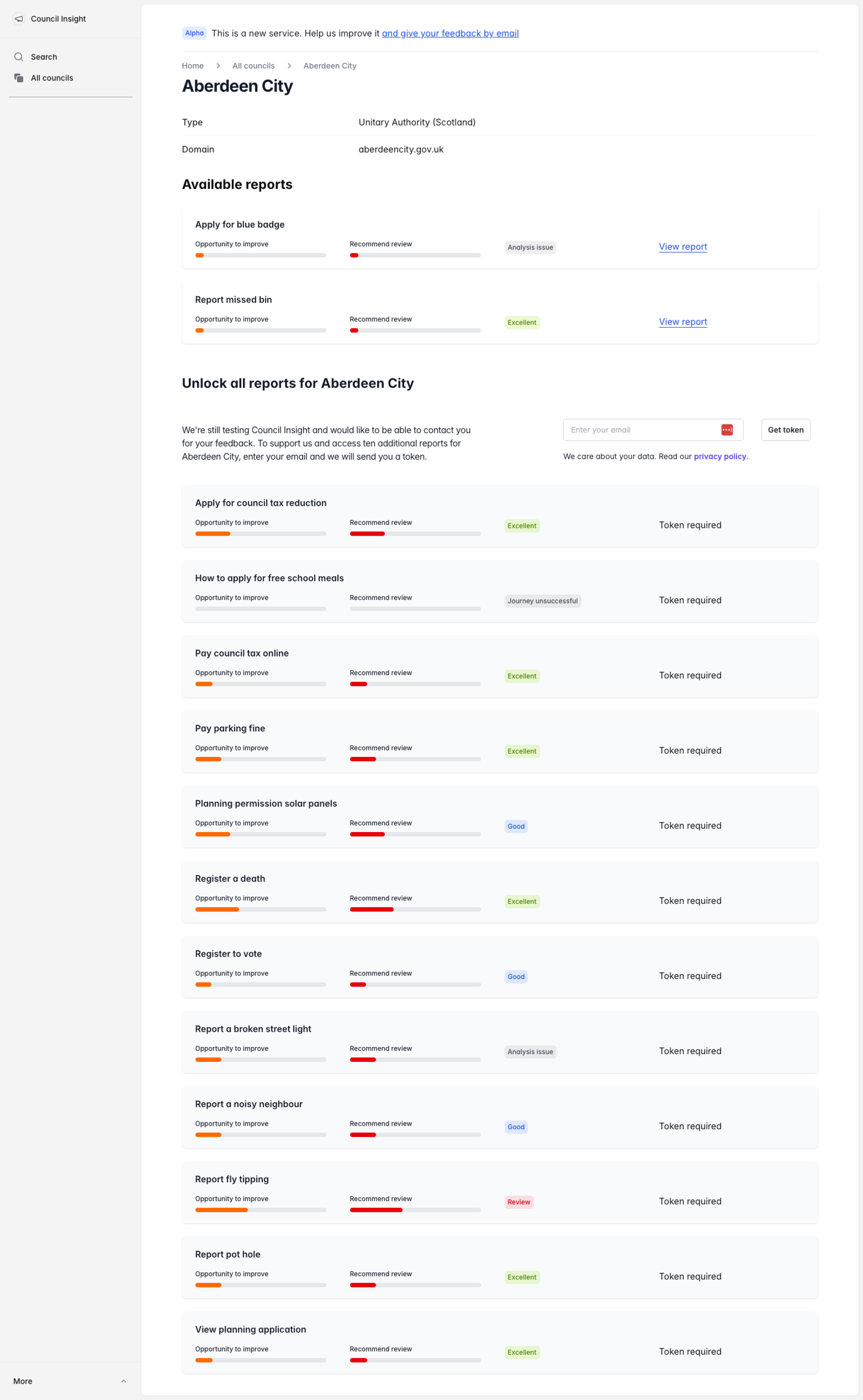
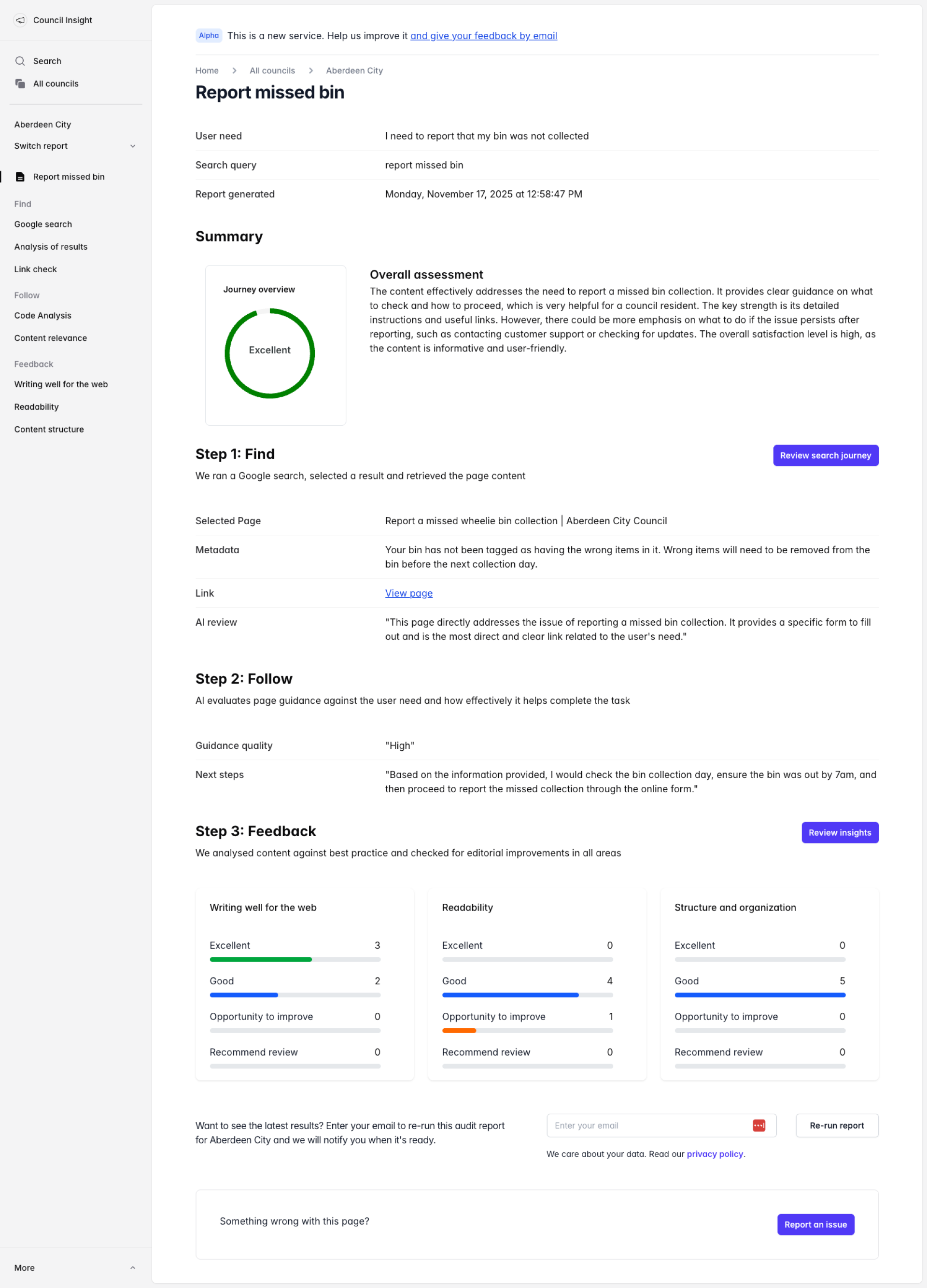
David Bishop: The approach tries to follow each step that a customer would take in finding the information they need. We start with a Google Search based on a known search term, but then use AI to pick which link it feels best meets their need. We might pick the wrong page, but a customer would too if the page title and meta description are not helpful. So this is the first real test of editorial content.
We then use a series of AI steps to see if the editorial answers the need and aligns with the UK Government Design Service best practice. It doesn’t always get it right, but it’s a good indicator of where customer needs are being poorly met. Under the hood, we are “just” orchestrating a series of AI chat prompts. But orchestrating this on a large scale is not as easy as you might think. When you are dealing with 400 different websites, each with its own page layout and render techniques, it takes quite a lot of work to extract the content so that you can perform useful and repeatable analysis.
TDT[3]: Before we dig deeper: Under what licence is Council Insight released (GPL, LGPL, MIT, etc.), and why did you choose that model? With the platform currently free (gratis) and open source (libre), how do you envision its future accessibility and monetisation?
David Bishop: At present, this is a research project; we want to see if we can create something useful before we consider how to monetise the service. I think we are still learning.
The Council Insight report will always be free. It’s an easy way to give back and share something useful. But the platform is quite complex, and the code is only a small element. It’s been achieved through an orchestration of various technologies, including local AI Servers. I think the Drupal community will need more automated analysis at scale to achieve some of the aims of the Drupal AI & CMS project. I’d love to be a part of that to build an open-source capability in Drupal. But what I’ve built is a lot more about hosting and orchestration than software at this point.
TDT[4]: You opted from the start to draw a clear line: no AI‑generated content, instead, the tool points editors where they should focus. Why was it important to take that “support, not replace” stance, and how have people responded?
David Bishop: I’ve worked with several content and user experience designers, not least my wife, Lydia, so I’m very aware that there is more to writing content than the words we see on the page. Accessible and easy-to-follow instructions, such as we see on the UK Government passport renewal process, for example, have come from a huge amount of consideration and user research.
Crawling a web page, I don’t know the reasons why those words or terms were selected, so there is not enough context to pass this to an AI prompt to suggest something alternative. It takes skilled content designers to write good editorial.
I think tools can help them be more efficient, but if we try to automate the process fully, the results would be weaker and less valuable.
These are complicated services often delivered to challenging social situations, and it takes time to build up the experience to know how to write for the web in this context.
TDT[5]: Building this tool locally with open‑source systems, including Drupal, Mistral7B, Ollama, RabbitMQ, must have required serious orchestration. What were the toughest technical or logistical challenges you encountered, and what did you learn?
David Bishop: I’m preparing a talk on this topic, and I think I’ve identified twenty learning points I've gained from building this solution. I won’t go through all of them, so here are a few of the key ones.
Firstly, cloud AI services are amazing. Behind the simple chat prompt we use, there is a huge amount of orchestration, web crawling, reasoning, and reflection built into these services. However, it uses a lot of energy and computing power to serve up an accessible AI chat prompt. One of my first challenges was that these services are throttled by providers, making it hard for a service like mine, which needs to handle hundreds of chat requests in a very short period, to work.
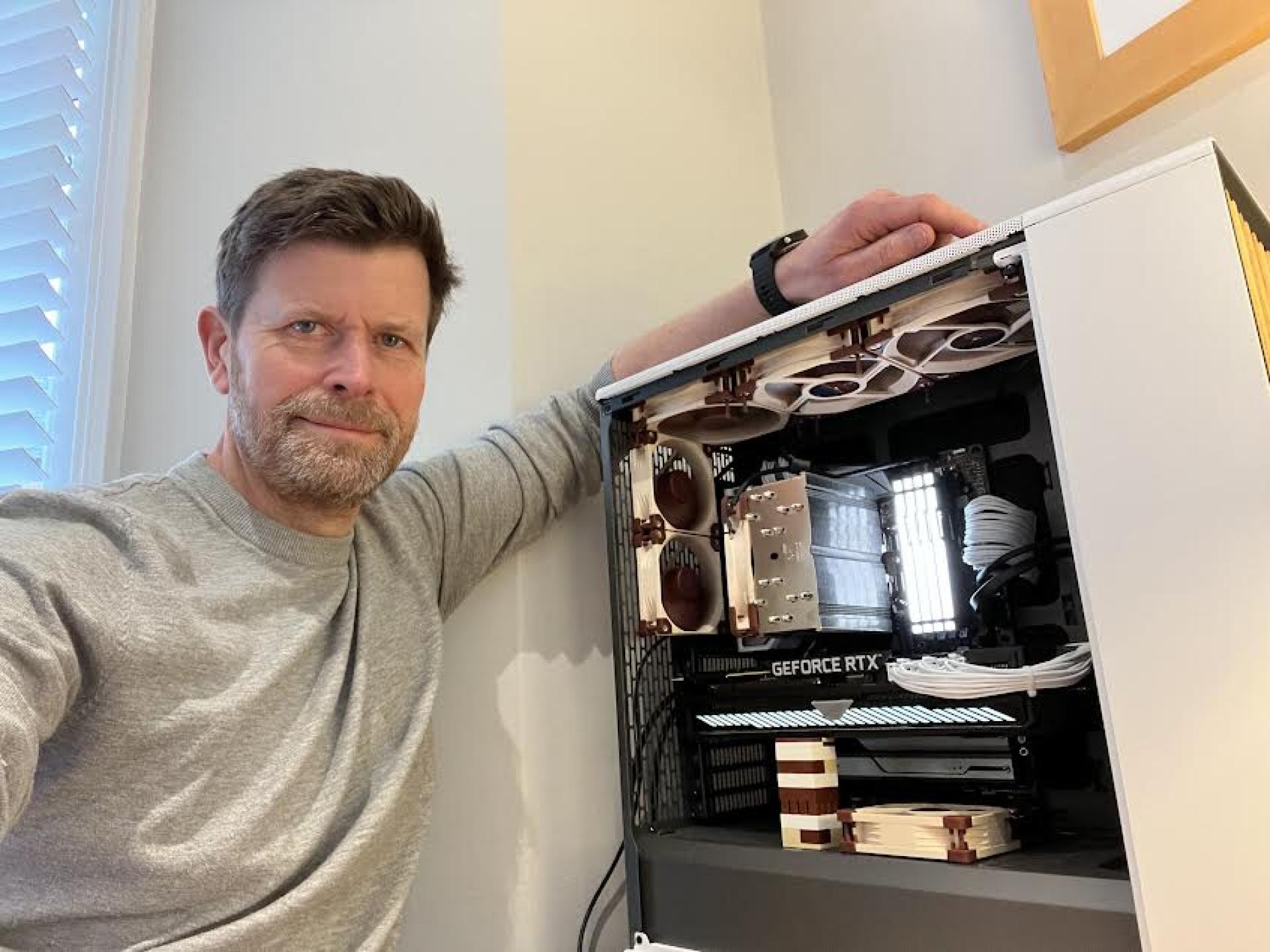
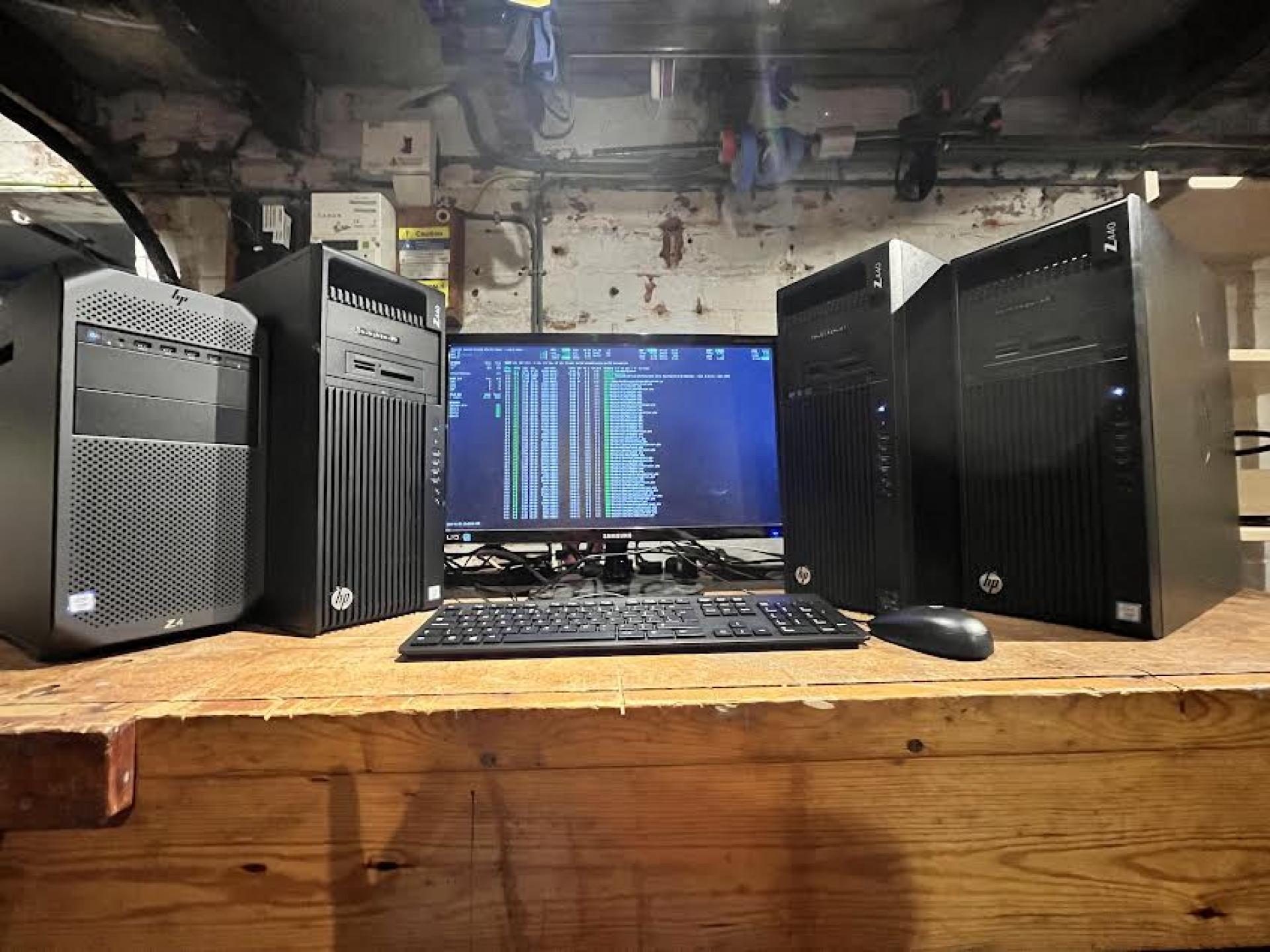
However, I learned that I could build much simpler, more energy-efficient, and (in the long run) cheaper alternatives using open source LLM models run on workstations I built at home. It was also nice to have an excuse to play with hardware; these toys are taken away from us with utility-style cloud services.
A second challenge was concurrency. The standard way to run multiple commands in Drupal is to create a batch or cron job. But this still creates a single execution cycle. To run multiple tasks at the same time, I have created a collection of RabbitMQ workers that now call a local server farm to achieve the service's required throughput. I can have 20 journeys underway at once with this approach. As someone who has mainly built websites in the past, I definitely had a mental shift in how I architected the solution.
The last big challenge is working with generative AI itself. It takes time to figure out how to break down the task into small enough prompts with sufficiently tight parameters that you get back an answer that can be built into an automated pipeline. HTML is not easy for LLMs to process, and sometimes the AI server can become overloaded by the context and simply hang. Building in fault tolerance to handle these unexpected failures took quite a bit of refactoring.
TDT[6]: You’ve credited your partner, Lydia Bishop, a senior UX lead, as the person who “makes it valuable.” How has her background in accessibility and government design standards influenced Council Insight’s usability and direction?
David Bishop: Lydia and I have been building websites through our own businesses and working for consultancies together for several years. In her recent roles, she worked on a number of large central government projects, which were aligned to GDS standards. Her typical working team comprised a user researcher, business analyst, content designer and UX designer. Lydia would typically take the role of UX design lead, some content design but also service design. She knows how key content design is to usability, the difference great content design makes to a project’s success, and how an iterative content development process works. We are trying to help local government teams, who don’t have the luxury of this scale, to make some quick wins, provide supporting tools, and enable them to deliver a high quality content, quicker.
TDT[7]: Beyond pointing out pain points, Council Insight also surfaces examples of what’s working. Why is it important to show positive models, and how can peer‑insight support collaboration among content teams across councils?
David Bishop: Having worked with and chatted to council web teams, they are a very collaborative, open and sharing community. There is no competition between councils; they each serve a distinct geographical area and are happy to share what works for them, so taking good ideas from one council to another is very natural. However, with 400 councils, it can be hard to find a good example for your current topic of interest, so many tend to check out the same sources for comparison. If you can quickly and easily make the pool of influence bigger, you are more likely to find examples that resonate. This “best practice” feature has been of great interest to the teams we’ve talked to and is a key feature of our next release.
TDT[8]: You’ve spoken of a future subscription‑service offering deep‑dive analysis of up to 100 journeys per site. What additional value would that provide beyond the current offering, and who will benefit most from it?
David Bishop: Our ideas are fast-moving, and we’ve actually evolved a little since then. We are currently developing a service to perform a full-site audit of the top 500 journeys for enterprise websites, based on business value. Using Google Analytics, service demand and value data, we are developing a service to help a web team plan the next 12 months of improvements, focusing their limited resources on where they can deliver the greatest customer impact. We are just starting our first trial of this service with a London Borough in the next month. But we hope to roll this out as a commercial service later this year.
TDT[9]: You’ve also hinted at expanding into sectors beyond local government, such as universities. What unique challenges or opportunities do you see in applying this model to those environments?
David Bishop: I think what is fortunate with the local authority is that the customer's need is very tangible. If you’ve got a parking fine to pay, your bins haven’t been collected, or you are interested in becoming a foster carer, we can model this need with relative ease and evaluate how successfully the website guides you towards the information you are looking for.
The organisation types that Drupal commonly serves, such as universities and charities, also have fairly clear customer journeys and those teams, particularly in universities, face very similar challenges to web teams in local authorities; They have a large body of content, a small web team, but the potential to greatly improve customer experience and engagement with more accessible editorial and guidance.
It will take a bit more effort to compile the list of customer needs, but the tool can still work in the same way.
TDT[10]: Council Insight is built on Drupal. Why was Drupal the right platform for this project, and what has it allowed you to do that other systems might not have?
David Bishop: I’m sure there are many ways this solution could have been orchestrated, and Drupal is just one of them. But I’ve been involved in designing and delivering some very complex enterprise solutions, and I’ve always found that,
with Drupal, you can start small (relatively) and it will scale with you as your solution grows.
The views module is fantastic for data analysis, batch processing and cron jobs can be a great way to get started with automation, but later you can switch the same code to a RestAPI interface orchestrated externally with relatively little effort. Drupal has a mature configuration management system, and DDev makes it easy to spin up environments. As I look to build out customer experience, I can tap into user accounts, access control and single sign-on without changing platforms.
Ten years ago, I had the opportunity to build a solution for a large, international mass-participation event. We were fundraising, and the solution had to scale to an as-yet unknown number of user registrations, collect event data, present data-driven real-time dashboards, and integrate with a collection of other systems. Drupal didn’t let me down; it scaled and scaled, and every time there was an issue, the framework had an answer. So I guess, fundamentally, I’m hugely grateful for what Dries started, and how the community has grown. Drupal has shaped my career. There might be other communities out there, but there is something special about this one. So, yes, if I can, I’ll put Drupal at the heart of those solutions.
TDT[11]: Let’s shift to your broader practice. Through Digital Journey Coach, you work with clients on digital strategy: what kinds of problems do your clients bring you, and how does your approach help them move from uncertainty to outcomes?
David Bishop: Digital Journey Coach was started because I found myself regularly speaking to some large organisations where their digital purpose had got lost. In organisations where the delivery of website experience was spread across multiple teams, all of whom had competing responsibilities, they often lost sight of the customer experience. In one case, a purchase journey went through a collection of different platforms, each bolted on to serve a business need, but which resulted in a difficult and confusing user experience.
I was starting to shape a coaching technique that involved establishing a continuous improvement cycle. This technique helps organisations translate their business objectives into customer needs and then work through their digital experience to ensure the two are aligned and deliver evidence-based value.
The council insight system is an opportunity to provide that service on a massive scale. It starts with the customer's needs and their experience and helps teams identify areas of improvement.
TDT[12]: Digital Journey Coach blends consulting with coaching and training. What kind of mindset shift do you believe is most critical for digital teams today, especially in large or slow‑moving organisations?
David Bishop: To be honest, I find those who work in web teams and content design don’t need a mindshift; they understand that customer experience is king and, if they had the resources and were suitably empowered, they would not struggle to improve website content.
A key challenge that I see in these teams is trying to service the needs of many departments, each providing content that is often an internally-focused description of what they do rather than answering a specific customer need. Aligning that to a consistent content strategy that residents find easiest to engage with is hard and made harder by internal stakeholders not wishing to see their content changed.
The second challenge is being able to focus their limited resources on delivering the greatest impact. I’ve seen many teams that have a service request approach to workload, driven by internal interests, rather than the team being empowered to focus their time on where they see the greatest customer benefit.
One of the aims of the council insight report is to give those teams a tool to say, “Look, this is why we want to be more customer-centric” and start to build a shared understanding of what good looks like.
TDT[13]: How did your consultancy practice influence how you built Council Insight, from architecture to UX to the way insights are delivered?
David Bishop: At the launch of Digital Journey Coach in 2025, I gave a talk at DrupalCamp England on the importance of identifying a journey’s current value versus its potential value, and how to realise that missed opportunity. This was based on being clear about what purpose your website serves, what customers need you to satisfy, looking at the experience from their perspective, collecting their pain points, and making measured improvements.
It was all about focusing on the customer journey, which is something experienced hands know well but might not be familiar to journey web developers who are focused on the technology rather than the output. Our journey-based analysis tries to help bring success back to the customer, rather than whether the HTML is 100% correct or the page is being served quickly.

TDT[14]: You’re closely involved with the Drupal AI Initiative, helping Drupal evolve alongside the world of artificial intelligence. What role do you think Drupal should play in the AI space, and what risks or responsibilities come with that?
David Bishop: I think there is a huge opportunity for Drupal with AI. The AI initiative feels like a good thing, and it should help the community benefit from a structured step forward with less overlap. From my own experience of working with AI tools, the fact that Drupal is a highly extensible code base, with a strong object-oriented architecture and clear separation of concerns, is a real benefit when working with AI coding tools.
The quality of AI output is as good as the context you provide, and using tools like PHPStorm and Junie, I’ve been impressed by how well they understand Drupal structures. You can ask it to create a new service that performs a specific task, and the generated code quality is near-perfect. The biggest risk with coding with AI is that you create technical debt that is hard to maintain. Drupal has a very clear separation of concerns in the code base, which makes it great for AI to follow.
TDT[15]: At DrupalCon Vienna, you referenced the future of “agentic websites” (sites that work quietly in the background to review content, flag issues, and suggest improvements). Council Insight seems aligned with that direction. What does a realistic version of that vision look like in the near future, and how close are we today?
David Bishop: Well, technically, Dries and Jamie Abrahams referenced it in an AI webinar a few months before Vienna, but that whole idea definitely captured my imagination and has been a driving force behind council insight. There is naturally a lot of work with the Drupal AI initiative focused on delivering benefits directly to editors, to aid page creation, as well as the orchestration of workflows.
But these agentic websites, if they are going to continually improve, need to know what to fix. To do that, they need to review content based on user needs and find the weak spots.
To be honest, I think I’ve probably cracked the finding the weak spots aspect. But knowing how to make it better requires a lot of context that I’m not sure we will have for a while. I’d refer back to my point on content designers not about to be replaced by AI.
TDT[16]: Finally, for content designers, web managers or public‑sector teams reading this, how can they get started with you or Council Insight, and what do you want them to know?
David Bishop: For starters, go to our website www.digitaljourneycoach.com, where you can see a free audit of ten council website journeys for all UK councils. I’m active on LinkedIn, so please do contact me if you would like to learn more or have a use case for what we’ve built. Lastly, if you are interested in having a full site audit undertaken on your website, please do get in touch.
 Kazima AbbasKazima Abbas is a sub-editor at The Drop Times
Image Attribution Disclaimer: At The Drop Times (TDT), we are committed to properly crediting photographers whose images appear in our content. Many of the images we use come from event organizers, interviewees, or publicly shared galleries under CC BY-SA licenses. However, some images may come from personal collections where metadata is lost, making proper attribution challenging.
Our purpose in using these images is to highlight Drupal, its events, and its contributors—not for commercial gain. If you recognize an image on our platform that is uncredited or incorrectly attributed, we encourage you to reach out to us at #thedroptimes channel on Drupal Slack.
We value the work of visual storytellers and appreciate your help in ensuring fair attribution. Thank you for supporting open-source collaboration!



ASK: Drupal Community Needs Your Support
View all →

Disclaimer: The information provided about the interviewee has been gathered from publicly available resources. The responsibility for the responses shared in the interview solely rests with the featured individual.
Note: The vision of this web portal is to help promote news and stories around the Drupal community and promote and celebrate the people and organizations in the community. We strive to create and distribute our content based on these content policy. If you see any omission/variation on this please reach out to us at #thedroptimes channel on Drupal Slack and we will try to address the issue as best we can.
Related Organizations