




Green UX in the Age of AI: Digital Products for a Sustainable Future

This guest article by Petra Morawa-Zechner builds on the ideas she presented at DrupalCon Europe 2025 in Vienna. Her session, “Green UX in the Age of AI”, explored how designers and developers can reduce the environmental footprint of digital products without sacrificing usability or business goals. Here, she expands on those insights in her own words—urging digital professionals to align innovation with sustainability before the damage becomes irreversible.
If you design, build, or champion digital technology, now is the time to act. The choices you make today could mean the difference between a thriving digital ecosystem and a world choking on digital “plastic” tomorrow.
The rise of digital technology has transformed every aspect of modern life, but it is a common misconception that our online worlds are immaterial or divorced from environmental consequences. In reality, every digital experience, whether a website, app, or intelligent chatbot, requires energy, hardware, and infrastructure. These resources leave a measurable environmental footprint throughout the product's lifecycle.
The choices you make today could mean the difference between a thriving digital ecosystem and a world choking on digital “plastic” tomorrow.
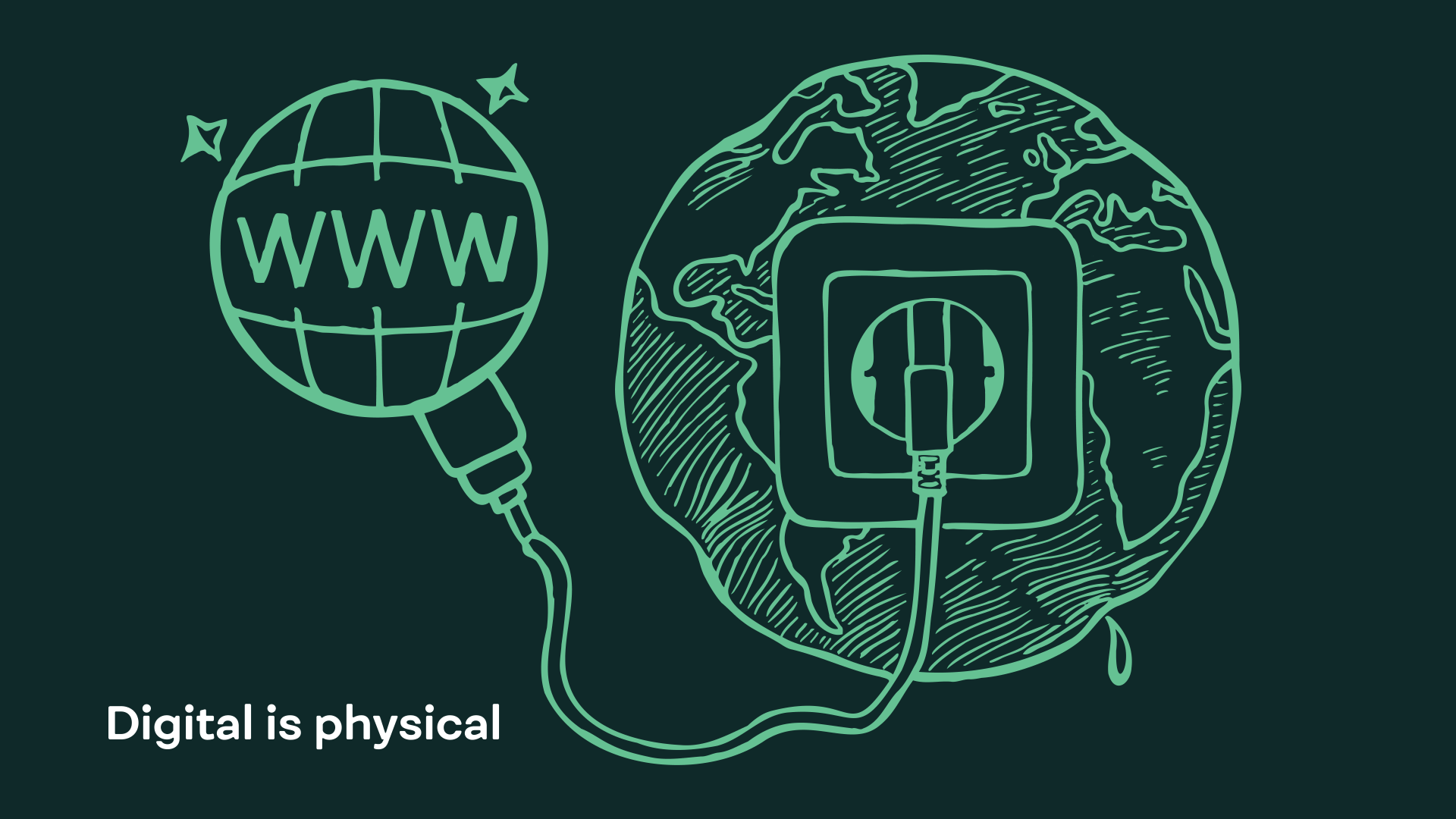
Digital Is Physical: The Environmental Cost of Our Digital Lives
Every moment spent online relies on complex physical systems. Servers hum in data centers, often operating around the clock and consuming electricity. They also generate heat that must be countered by water-intensive cooling systems. The network infrastructure that connects those servers to our devices – such as cables, routers, and wireless towers – also uses significant energy and resources. The rapid turnover of devices, driven by ever-evolving demands for speed and visual quality, leads to a growing amount of e-waste, much of which is not properly recycled.
Our digital consumption is not only a matter of electricity. The production and disposal of electronic devices strain global supply chains and natural ecosystems, while digital products themselves often nudge users toward overconsumption or inefficient habits that exacerbate ecological problems. This reveals an urgent truth:
designing digital products without considering the environment is no longer acceptable.
From Human-Centered to Planet-Centered Design
Traditional UX design has always focused intently on user satisfaction, making interfaces easy, efficient, and delightful to use. Yet, in the age of climate crisis, this approach is insufficient. Green UX demands an evolution. Responsibility must extend beyond the immediate user to include the planet and humanity as a whole, both now and in the future.
An Environmentally Sustainable Approach to UX Means:
- Considering the environmental costs at each phase of a product’s lifecycle
- Empowering users to make more sustainable choices known as “green nudging” by surfacing the consequences of their actions and defaulting to eco-friendly options.
- Raising awareness among users and stakeholders that every digital interaction compounds the environmental impact of our digital world.
Environmental Impact Meets Artificial Intelligence
While traditional digital products already add to carbon emissions and resource waste, the rise of AI makes these problems even more serious.
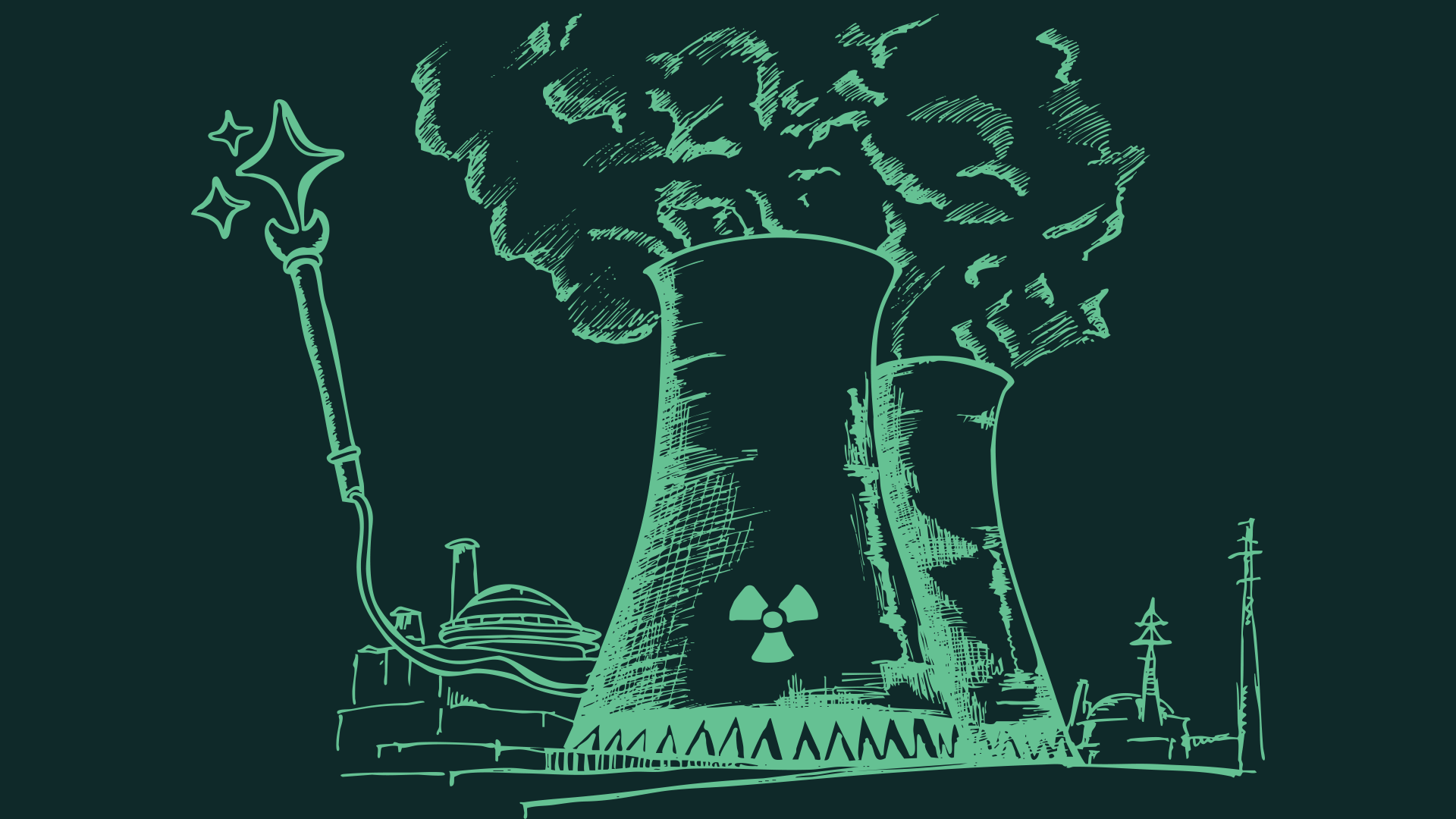
Advanced AI models – especially generative systems – require huge amounts of data and computational power. Training a state-of-the-art AI model can consume as much electricity as dozens of homes use in a year. Once deployed, AI models consume energy with every prompt and response, which multiplies their impact across millions of daily users. The hardware running these models quickly becomes obsolete, exacerbating the e-waste crisis. The amount of water needed to cool global data centers is already vast and is set to triple by the end of this decade, with AI being a major driver of this increase.
AI Is Like Plastic: A Powerful but Double-Edged Invention
To understand the predicament, consider this analogy: AI is to digital ecosystems as plastic is to the physical world. Like plastic, AI brings undeniable benefits – it makes things possible on a scale that was previously inconceivable, enabling creative breakthroughs, medical and climate innovations, and democratizing content creation.
Plastic revolutionized countless industries by being affordable, versatile, and nearly indestructible. It enabled hygienic medical supplies, safe food storage, mass transportation, and global communication. Likewise, AI accelerates innovation, automates complex processes, optimizes logistics, and opens doors to new sustainable solutions for energy, agriculture, waste management, and more.
Hindsight has shown us the downside: While plastic was initially hailed as modern magic for everyday life, we now grapple with uncontrollable plastic pollution generations later. Plastic waste fills landfills, pollutes oceans, and harms ecosystems. The very properties that made plastic miraculous – easy to make, easy to use – made it easy to throw away and impossible to fully control.
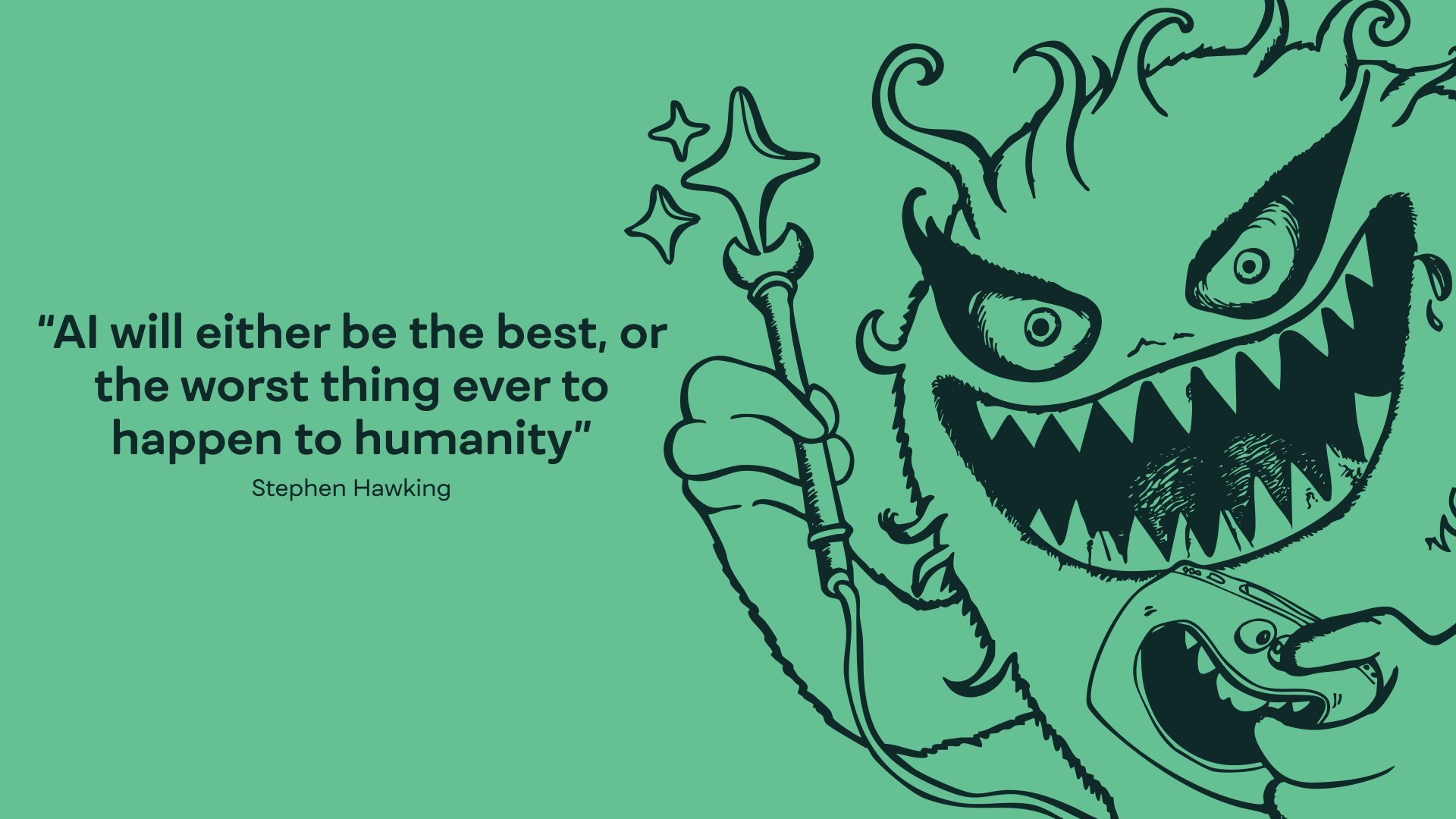
AI is also a double-edged sword. Its ability to instantly generate vast amounts of content, predictions, and analysis can benefit society. However, it also threatens to flood digital spaces with homogeneous, disposable, and even misleading content. The creation and storage of this content drains ever more energy and resources.
This is the emergence of "digital plastic": layers of synthetic, mass-produced information accumulating invisibly, yet tangible in their environmental toll.
Will We Learn From the Story of Plastic or Will We Repeat the Mistake?
The warning is clear. As with plastic, the true cost of AI may only become apparent once digital pollution is deeply entrenched. In the past, convenience and short-term gains overshadowed long-term consequences. Today, we still have the chance to steer AI toward sustainable practices, avoiding a digital legacy as detrimental as the plastic crisis.
Harnessing AI for Sustainability Without Compromising the Future
AI does have vast potential to help build a sustainable world. Classic AI and machine learning play crucial roles in:
- Optimizing energy grids for renewable power
- Streamlining transport logistics to cut emissions
- Enhancing recycling and waste sorting
- Supporting more sustainable agriculture and ecosystem monitoring
However, these solutions rely on classic machine learning, which is far less energy-hungry than generative AI. The rapid proliferation of large language models and synthetic content tools risks exacerbating the digital throwaway culture. This situation is reminiscent of the 1950s, when the celebration of increased convenience through plastic disregarded the consequences.
Best Practices for Green AI and Green Digital Product Design
How can the tech community ensure that digital and AI solutions support sustainability rather than undermine it? Here are some foundational principles:
1. Design for Energy Efficiency
- Choose the simplest and smallest model that solves the task
- Monitor and optimize resource use continually
- Prefer renewable energy in data centers and incentivize low-impact hosting
2. Minimize Unnecessary Data and Processing
- Reduce redundant page loads and data transfers
- Avoid overengineering features and animations that drain device batteries and server resources
- Apply model quantization and pruning to shrink computational overhead
3. Green Nudging and Informed Defaults
- Provide clear information about the environmental cost of user actions
- Set eco-friendly settings by default, but let users override them for transparency and trust
- Use behavioral nudges not only to drive business goals but to encourage responsible choices
4. Raise Awareness and Shift the Narrative
- Be honest about the capabilities and limitations of AI – no more “magic” marketing
- Never anthropomorphize AI: Doing so, just like promoting the “magic” narrative, creates the false impression that there are no limits and no consequences.
- Clearly communicate the environmental impact of both product and underlying AI systems.
5. Question the Need for AI
- Always ask: Is an AI solution needed, or would a simpler, less resource-intensive approach suffice?
- Build for user needs, not just to impress stakeholders or chase trends.
- Consider the true benefit: Do the outcomes justify the (often hidden) environmental costs?

Green UX Is Good UX
Skeptics may ask: What is the added value, beyond being eco-friendly?
The truth is, sustainable digital products are better on multiple fronts:
- They load faster, making users happier and boosting SEO
- They cost less to run and maintain
- They improve accessibility – leaner products work better for more people
- They are more resilient, easier to audit, and deliver demonstrable business value
A deep understanding of the user – meeting their needs while using resources wisely – naturally leads to products that are more usable, performant, and cost-effective, all without adding to the digital garbage heap.
Responsibility Is Collective
Robert Swan once said:
“The greatest threat to our planet is the belief that someone else will save it.”
This truth applies in the digital world as well. As digital professionals, it is time for us to take responsibility and be proactive. This means optimizing not only for performance and convenience, but also for environmental impact, which should be considered a fundamental measure of success. By learning from the story of plastic and confronting the seductive convenience of today’s digital magic, we can ensure that AI and digital technology remain a lever for good, not a burden for the generations to come.
 Petra Morawa-ZechnerDesigning digital experiences that respect both people and the planet.
Image Attribution Disclaimer: At The Drop Times (TDT), we are committed to properly crediting photographers whose images appear in our content. Many of the images we use come from event organizers, interviewees, or publicly shared galleries under CC BY-SA licenses. However, some images may come from personal collections where metadata is lost, making proper attribution challenging.
Our purpose in using these images is to highlight Drupal, its events, and its contributors—not for commercial gain. If you recognize an image on our platform that is uncredited or incorrectly attributed, we encourage you to reach out to us at #thedroptimes channel on Drupal Slack.
We value the work of visual storytellers and appreciate your help in ensuring fair attribution. Thank you for supporting open-source collaboration!


ASK: Drupal Community Needs Your Support
View all →
Note: The vision of this web portal is to help promote news and stories around the Drupal community and promote and celebrate the people and organizations in the community. We strive to create and distribute our content based on these content policy. If you see any omission/variation on this please reach out to us at #thedroptimes channel on Drupal Slack and we will try to address the issue as best we can.

Related Event Sessions

Related Events



Related Organizations

Related People


You may also like