



Deep Dive into Drupal’s Service Container: Tags, Compiler Passes, Providers, and Autoconfiguration

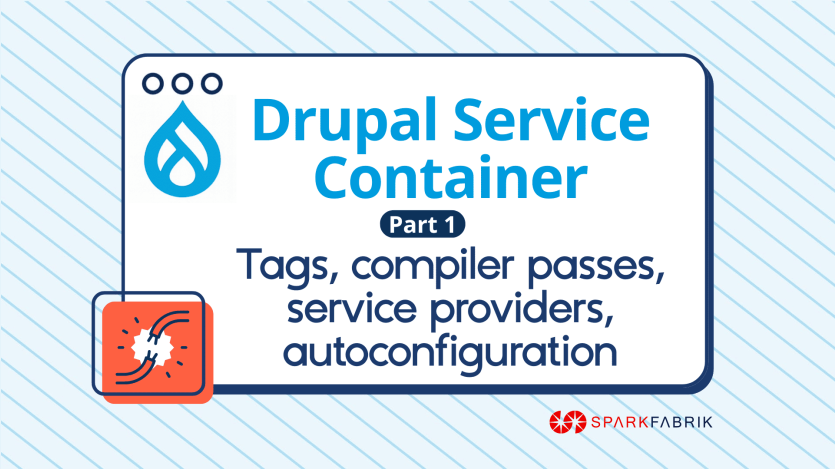
Sparkfabrik has launched a new technical series authored by Luca Lusso that explores the inner workings of the Drupal service container, beginning with tags, compiler passes, service providers, and autoconfiguration.
As Drupal continues to evolve with modern PHP and Symfony standards, the Service Container has become central to how the framework handles dependencies and service lifecycles. This first instalment explains how the container manages service instantiation, promotes loose coupling through the Dependency Inversion Principle, and allows developers to replace implementations without rewriting dependent code. Examples from Drupal Core and contrib modules such as Webprofiler demonstrate how services are defined, injected, and resolved through YAML-based configuration.
Luca details the key mechanisms behind Drupal’s container architecture. Service tags categorise and group services, while the compiler dynamically alters service definitions during compilation. Service providers register and modify these services programmatically, offering precise control over the container’s final configuration. Finally, autoconfiguration streamlines service setup by automatically tagging classes based on implemented interfaces, reducing boilerplate and improving maintainability for developers building modular systems.
This foundational article sets the stage for upcoming parts that will dive deeper into aliases, autowiring, service collectors, factories, and backend overrides. Through this deep dive, Sparkfabrik aims to demystify one of Drupal’s most powerful architectural systems and equip developers with best practices for scalable, maintainable module development.
ASK: Drupal Community Needs Your Support
View all →
Disclosure: This content is produced with the assistance of AI.
Disclaimer: The opinions expressed in this story do not necessarily represent that of TheDropTimes. We regularly share third-party blog posts that feature Drupal in good faith. TDT recommends Reader's discretion while consuming such content, as the veracity/authenticity of the story depends on the blogger and their motives.
Note: The vision of this web portal is to help promote news and stories around the Drupal community and promote and celebrate the people and organizations in the community. We strive to create and distribute our content based on these content policy. If you see any omission/variation on this please reach out to us at #thedroptimes channel on Drupal Slack and we will try to address the issue as best we can.

Related Organizations

Related People


You may also like