



Building from the Ground Up: Anish Anilkumar on Sparking Local Drupal Communities

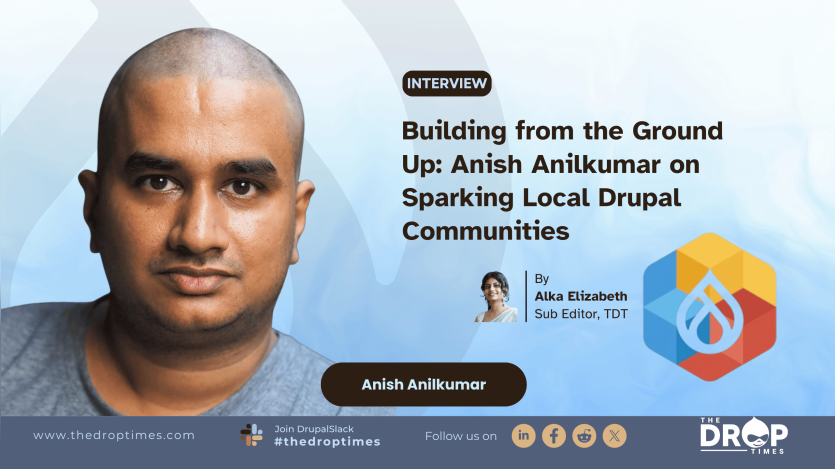
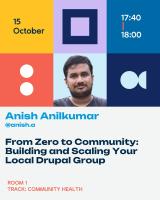
P rior to DrupalCon Vienna 2025, The DropTimes sat down with someone who truly lives and breathes community: Anish Anilkumar, a seasoned full-stack engineer and long-time Drupal contributor. With over twelve years of experience in web development, including stints at Meta and startups alike, Anish is best known not just for his technical expertise but for his relentless drive to build and sustain local Drupal ecosystems. His session at DrupalCon, "From Zero to Community: Building and Scaling Your Local Drupal Group", draws directly from his years of groundwork in Kerala, India, where he helped turn meetups of two into a thriving, inclusive community.
In this interview, sub-editor Alka Elizabeth explores what keeps Anish committed to the Drupal platform and the people around it. From his early days tinkering with Drupal 7 in college to shaping the direction of DrupalTVM and mentoring newcomers, Anish shares how his journey has been powered not only by code but by connection. His experiences with open-source collectives like Swathanthra Malayalam Computing and early exposure to Free Software movements have clearly shaped his philosophy: technology is important, but people come first.
What follows is more than a conversation about event logistics or code sprints. It’s a candid look at the human side of tech. Anish opens up about the struggles behind community work, the gaps in institutional support, and what truly motivates volunteers to show up, month after month. For anyone curious about what it takes to spark lasting impact in local tech scenes, his insights are both a reality check and a roadmap.
TDT [1]: Before we get into community building, let's start with your own Drupal journey. What keeps you deeply invested in Drupal after all these years, and what has the project meant to you personally and professionally?
Anish Anilkumar: The first time I used Drupal was when I was tasked with building an informational website for my college's technology fest. I was experimenting with Drupal 7, which was fairly new at the time. I chose it and built a minimalist site with all the features we needed. Even as new requirements came up, Drupal adapted easily. I was fascinated and blown away by its simplicity and flexibility.
After college, I co-founded a company with friends called Hello Infinity, where we used Drupal alongside other systems. But I truly immersed myself in Drupal when I joined Zyxware. There, I was trained to harness the full potential of the platform, and my career really took off. Professionally, Drupal shaped who I am. I grew with the platform, and later, the Drupal community opened many doors for me.
Community building should be a collective effort, not something handled solely by a core team or a few individuals. When tasks are distributed, leadership becomes more accessible and the community more resilient.
TDT [2]: You've stayed engaged with the Drupal community long after others moved on. What's been your driving force not only to participate, but to take on the work of organising and sustaining local events?
Anish Anilkumar: Even though I started contributing to Drupal while I was at Zyxware, I truly experienced the spirit of the Drupal community when I attended my first DrupalCon. I met so many amazing people, not just from India but from around the world. I earned my first Drupal certification there and got to participate in a code sprint, which was simply incredible. I was mentored by actual maintainers of the project. I worked on some bugs and received a few credits for contributions to Drupal Core. That’s when I realised how much our contributions are valued. I wanted to recreate that high I felt at DrupalCon. So I started attending other events, from camps to local meetups in different cities. That kept the momentum going. Eventually, we began organising meetups in Thiruvananthapuram and Kochi.
Organising an event is a lot of work, even for small local meetups. The key is to keep the meetups regular and consistent. Sometimes, we just call people individually just to ensure attendance. Even if two people come and discuss Drupal or anything that piques their curiosity, I consider that a successful meetup.

TDT [3]: You've been a key force behind DrupalTVM, helping shape its direction and growth. What makes that community work where others haven't?
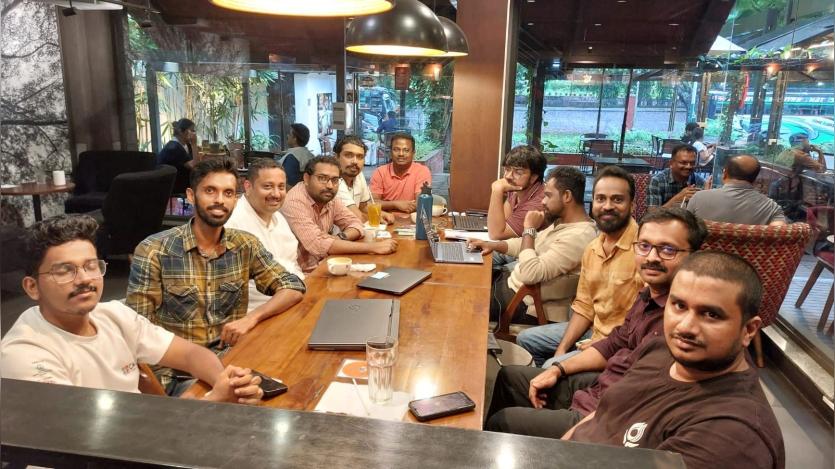
Anish Anilkumar: When Anto Jose and I rebooted DrupalTVM, we had a clear vision: to build a supportive, idea-sharing community where everyone felt welcome. We wanted the meetups to be regular and the topics engaging enough to attract new participants. Most importantly, we aimed to create an environment where newcomers could feel included from day one.
One of the things we did differently was to include general sessions alongside Drupal-focused ones. We invited speakers outside the Drupal ecosystem to bring fresh perspectives and broader insights. For example, Jaisen Nedumpala, a panchayat secretary with the Government of Kerala, shared how local self-governments use Drupal and how public sector software systems function. Shibin, from Factorial GmbH in Germany, led a session on K6 performance testing. We also hosted talks like "Career Opportunities in Germany" by Santhosh Raju and "Applying for a Schengen Visa" by Anto Jose.
Another key principle we followed was keeping the community people-first. Companies are welcome to participate, contribute, and offer resources, but we ensure that their interests never take precedence over those of the individuals. All initiatives and decisions are made collectively by the community members, not dictated by corporate agendas.
TDT [4]: Before immersing in Drupal, you were active as a volunteer with the local Linux User Group and the Indic language technology collective Swathanthra Malayalam Computing. How did those experiences shape your approach to community building?
Anish Anilkumar: I was introduced to the world of Free Software at a conference in Thiruvananthapuram, organised by the Kerala government. It featured prominent figures like Richard Stallman, Jimmy Wales, and Eben Moglen. My friend Mahesh Mohan and I attended simply out of our interest in GNU/Linux at the time. That event made a lasting impression on me. It made me realise that what truly matters isn’t just the technology, but the philosophy behind it and the reasons why we should build and contribute to free software.
That conference opened the door to more opportunities. I got involved with Swathanthra Malayalam Computing (SMC), spoke at several events, and met many inspiring people. I began contributing to and later leading localisation projects for Firefox, GNOME, Diaspora, and others. I also helped organise events, including the 12th anniversary of SMC. Over time, it wasn’t the technology that kept me going. It was the friendships and shared purpose that truly motivated me.
TDT [5]: Many local tech communities start with energy but fade after a few meetups. What structural missteps have you seen that make this decline almost inevitable?
Anish Anilkumar: This is a very common scenario, and there are no magical solutions. But there are a few things we can do. The key is to keep going consistently, even if there is not much attendance. If just two people show up to a meetup, I still consider that a success. What matters is keeping the momentum alive. We need to welcome new people, involve them, and delegate tasks so that the community doesn’t rely on the same individuals every time.
People get busy, and it’s not realistic for one group to organise every event indefinitely. When that happens, things stagnate and eventually decline. The goal is to create meetups that people want to attend and to distribute responsibilities so that events continue even if one person steps away.
TDT [6]: What makes local meetups worth fighting for in an era where global conferences, Slack groups, and online content seem to meet most developers' needs?
Anish Anilkumar: Humans are social beings, and we build incredible things when we come together. Local meetups aren’t just about technical or professional needs. They help us feel connected, reminding us that we’re part of something bigger. That sense of belonging is essential.
Meetups create space to share knowledge, discuss challenges, and think collaboratively. The friendships and connections that grow from these gatherings are invaluable. While global conferences and online communities have their place, they can’t replace the impact of local, in-person communities.

TDT [7]: In most local groups, everyone benefits from community events, but very few take ownership. Why do you think that dynamic persists, and how do you personally navigate the imbalance between contributors and consumers?
Anish Anilkumar: Local groups should involve more people from the start. It should be structured in a way that the people who come to meetups also have shared ownership of the event. Delegate minor tasks to newcomers so that they feel part of the community. Eventually, you will build something together that you will be proud of.
TDT [8]: Do you believe Drupal as a project does enough to support grassroots community-building? What would meaningful support from the wider ecosystem actually look like?
Anish Anilkumar: I don’t think so. The global Drupal community is amazing, and Slack is a great resource. But when it comes to building and sustaining local communities, the Drupal project isn’t doing enough. As a local community, we receive very little support from the central project when it comes to organising events or activities. Whether it's finding expert speakers or covering small expenses, we’re left to figure it all out on our own. As far as I know, there are no clear support mechanisms available from the Drupal project for local organisers.
Let me give an example. The Debian community consistently provides financial support for small, local events. I recently helped organise a Debian release party. It had a solid turnout, and the total cost was just around 1,500 rupees (about $20). The budget was minimal, but the impact was significant. The same kind of support exists in other open-source communities like Wikipedia and OpenStreetMap. They even help find speakers and assist with travel arrangements. Drupal needs to adopt similar practices. The financial and logistical burden shouldn’t fall entirely on local community leaders. The Drupal project needs to step up and offer meaningful support to make local communities more sustainable.
The Debian community consistently provides financial support for small, local events. The same kind of support exists in other open-source communities like Wikipedia and OpenStreetMap. They even help find speakers and assist with travel arrangements. Drupal needs to adopt similar practices. The financial and logistical burden shouldn’t fall entirely on local community leaders. The Drupal project needs to step up and offer meaningful support to make local communities more sustainable.
TDT [9]: What does a thriving local community give back to Drupal, not just in code, but in continuity, culture, and contributor growth?
Anish Anilkumar: In my opinion, the lifeblood of the Drupal project is its users and the developers who contribute to it. To keep the project thriving, we need to grow its user base. Local communities play a vital role in that effort. They help introduce more people to Drupal, keep them engaged, and support them as they navigate challenges. Expanding these kinds of grassroots activities is essential for Drupal to remain active and relevant. As we say in Malayalam — പലതുള്ളി പെരുവെള്ളം (Palathulli Peruvellam/Many droplets make a grand deluge). A single local community might not seem like a big deal on its own, but together, they make Drupal stronger.
TDT [10]: How can we distribute the burden of community growth more evenly among volunteers? What would it take to make local leadership more accessible and less exhausting?
Anish Anilkumar: Leaders need to learn to delegate. They shouldn’t try to do everything themselves. It’s not sustainable and will eventually lead to burnout, which can cause the community to lose momentum. Responsibilities should be shared among all members. Community building should be a collective effort, not something handled solely by a core team or a few individuals. When tasks are distributed, leadership becomes more accessible and the community more resilient.

TDT [11]: If we're serious about making Drupal visible and relevant in more regions, what needs to fundamentally change in how we think about community-building from tools to mindsets to incentives?
Anish Anilkumar: The strength of any community lies in its people. To grow, we need to extend that energy to more regions. It’s important to support those who want to build communities in their own areas. Established groups can help kick-start new ones by offering to speak at each other's meetups. We can document successful practices while recognising that each community is unique and must decide what works best for them.
Incentives don’t always have to be about issue credits or professional advancement. For many, the real reward is the friendships and sense of belonging that come from being part of a community. That’s what keeps me going.
 Alka ElizabethMy puns are intended.
Image Attribution Disclaimer: At The Drop Times (TDT), we are committed to properly crediting photographers whose images appear in our content. Many of the images we use come from event organizers, interviewees, or publicly shared galleries under CC BY-SA licenses. However, some images may come from personal collections where metadata is lost, making proper attribution challenging.
Our purpose in using these images is to highlight Drupal, its events, and its contributors—not for commercial gain. If you recognize an image on our platform that is uncredited or incorrectly attributed, we encourage you to reach out to us at #thedroptimes channel on Drupal Slack.
We value the work of visual storytellers and appreciate your help in ensuring fair attribution. Thank you for supporting open-source collaboration!


ASK: Drupal Community Needs Your Support
View all →

Disclaimer: The information provided about the interviewee has been gathered from publicly available resources. The responsibility for the responses shared in the interview solely rests with the featured individual.
Note: The vision of this web portal is to help promote news and stories around the Drupal community and promote and celebrate the people and organizations in the community. We strive to create and distribute our content based on these content policy. If you see any omission/variation on this please reach out to us at #thedroptimes channel on Drupal Slack and we will try to address the issue as best we can.
Related People


Related Event Sessions

Related Events


You may also like