



DrupalCamp Asheville 2025: The People, Purpose, and Ideas Shaping This Year’s Event

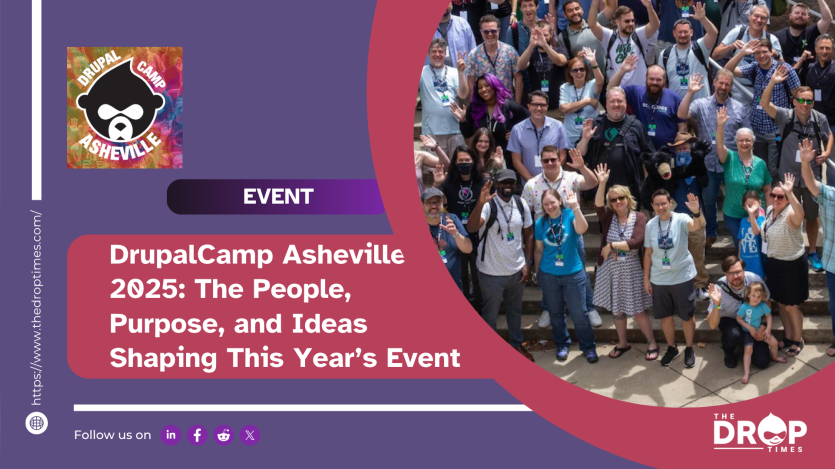
The Drupal community has always valued shared spaces—not just physical ones, but also virtual spaces where people can exchange ideas, ask questions, and learn from one another. Events like DrupalCamp Asheville give people that chance. Whether it’s updates, challenges, new tools, or big-picture thinking, it all centres around one common interest: Drupal. Every event offers that same familiar foundation, but each one brings something new. And this year’s Asheville camp is no different—it’s set to offer fresh insights, deeper conversations, and meaningful takeaways for everyone in the community.
Now in its latest edition, the camp remains a welcoming and valuable space for developers, designers, project managers, and anyone working with Drupal. Friday begins with hands-on training sessions and an "unconference" in the afternoon—a format where topics are generated directly by the people in the room. Saturday is packed with sessions on topics such as DevOps, accessibility, site building, and backend and frontend workflows. Sunday, the final day, is more relaxed and focused on building connections through community-led activities and informal meetups.
To understand what this year’s camp is focusing on, The Drop Times spoke with the organisers of DrupalCamp Asheville 2025. We connected with AmyJune Hineline, Certification Community Architect at the Linux Foundation; Aeryn Jackson, Assistant Director for Web Infrastructure at UNC Charlotte; and April Sides, Principal Software Engineer at Red Hat—all of whom shared what makes this year special and what attendees can look forward to.
Addressing Community Needs Head-On: Beginner Support, Financial Accessibility, and Local Outreach

April Sides
April Sides
In response to growing conversations within the Drupal community about inclusivity and support for newcomers, April explained that this year’s DrupalCamp Asheville is designed to meet those needs in clear, deliberate ways.
One of the most direct steps the organisers took was rethinking the structure of beginner content. April shared that they not only asked specifically for beginner-level session proposals but also ensured that “beginner options [are] in every time slot.” In addition, what was previously a half-day training for beginners has been extended to a full day. The goal is to ease the learning curve and make the event less overwhelming for people just starting out with Drupal.
Financial accessibility was also a major focus. As April explained,
“We offered a free Community ticket for those facing financial challenges, between jobs, or any other reason that makes attending camp a financial strain.”
These community tickets are part of a broader effort to break down barriers and make DrupalCamp more open to everyone who wants to attend.
The team also turned its attention to local outreach. April noted that they participated in nearby tech meetups to promote the event and grow the local Drupal network. While she admits “there’s definitely more work to be done here,” she emphasised that the effort was intentional and part of a long-term strategy to build a more connected local community.
Balancing Value for Developers, Newcomers, and Non-Coders

Aeryn Jackson
Aeryn Jackson
Creating a Drupal event that’s useful for everyone — from experienced developers to newcomers and non-technical professionals — takes careful planning. Aeryn explained how the team approaches that challenge.
“By giving thought to the sessions chosen for the conference each year, we try to get a good mix of different levels.”
they said.
This means including beginner and intermediate sessions focused on Drupal, while also offering talks that extend beyond purely technical content. The aim is to create space for content strategists, project managers, and other non-developers to find sessions they can engage with and learn from.
Aeryn also pointed out that not all the value comes from what happens in the official sessions. Informal networking and spontaneous conversations play a major role, too.
“The hallway track at DrupalCamp Asheville is very lively and provides everyone a great chance to catch up, ask questions of the speaker for a session they just attended, or request another opinion on an issue they might be having.”
Preparing for Asynchronous Learning While Focusing on In-Person Value
While hybrid events have become increasingly common across the tech world, not every event has the resources to execute both in-person and virtual formats effectively. For DrupalCamp Asheville 2025, the team made a strategic decision to focus their efforts on enhancing the in-person experience while still providing value to those who may not be able to attend live.
April Sides explained,
“All sessions will be recorded and available on our YouTube channel and Drupal.tv after the event for asynchronous consumption.”
This allows attendees — and others in the Drupal community — to revisit content at their own pace after the camp.
However, she was also clear about the limitations of going fully hybrid.
“Running a truly hybrid event would require more volunteers to do it well,”
she said. With the resources currently available, the camp is prioritising live interactions, on-site learning, and in-the-moment community engagement.
How Training Topics Were Chosen: Listening to the Community

When it came to selecting training topics, the team behind DrupalCamp Asheville didn’t just rely on assumptions or repeat old formats. Instead, they made an effort to listen to community interests and track what’s gaining traction across other camps.
AmyJune Hineline, Certification Community Architect at the Linux Foundation, shared their approach.
“We put out an interest form through social media, email, and reached out to trainers we've worked with before,”
she said. They also examined the sessions that other camps were offering to gauge what people wanted to learn.
Ultimately, AmyJune said it came down to balancing community input with emerging trends:
“From there, it was about finding that happy medium between what people were asking for and what’s new and exciting in the Drupal world.”
The result was a mix of foundational topics for beginners and cutting-edge material for more experienced attendees.
Designing Inclusive Training Sessions for All Skill Levels
Even within a single training session, not every attendee brings the same level of experience. Addressing this reality was a key part of the planning process.
AmyJune explained how they’re tackling this challenge.
“Each training page clearly lists the intended skill level, so folks can choose what fits them best,” she said.
But that’s just the start.
“Typically, trainers start with the basics and layer on more advanced material, offering optional content for those who want to learn a bit more,” she added.
This layered approach allows people to follow at their own pace. Additionally, some sessions include helpers who can offer one-on-one support, so no one is left behind or overwhelmed.
“The goal is to keep things flexible and make sure everyone feels supported and engaged.”
Guiding First-Time Attendees Through the Unconference
To help first-time attendees participate in the unconference format, Aeryn Jackson shared that Aeryn and Sara will be taking the lead this year.
“Yes, myself and Sara will be taking over the Unconference this year, and we plan to walk through the process at the beginning and encourage everyone to get involved.”
Because attendee-driven topics guide the unconference, the pair plans to encourage discussions that serve a range of experience levels.
“We hope to steer conversations to allow for multiple levels of conversations to be had at the same time,” Aeryn added.
This approach is intended to support both beginners and more advanced users in overlapping but accessible ways.
Elevating Non-Technical and Underrepresented Voices
Inclusivity extends beyond technical skill. Aeryn emphasised the team’s effort to make room for diverse perspectives in the unconference format.
“Providing a welcoming environment and asking for volunteers will hopefully go a long way,” Aeryn said.
Acknowledging the legacy of those who led before them, they added,
“As this is the first year Sara and I have taken this over, we have some big shoes to fill.”
One new idea this year is hosting more than one conversation at a time.
“Hopefully, the smaller conversations, instead of one speaker at a podium, will encourage alternative voices to be heard and welcomed,” Aeryn said.
Increasing Accessibility and Clarity Across Sessions
For attendees with different accessibility needs, the organisers have taken several steps to improve the experience.
April explained: “We ask our speakers to provide their slides before the event, if possible, so that attendees can have access to the material ahead of time.”
These slides will be published on the event website to assist people using assistive technologies and help others who prefer to preview session materials beforehand. April added that they also encourage presenters to reserve time for Q&A to help increase clarity and interaction.
What the Fireside Chat With Tim Doyle Means for the Drupal Community
Looking ahead to the featured "Sustaining Drupal" fireside chat with Tim Doyle, CEO of the Drupal Association, April shared why this session matters.
“I think it’s important to learn about how the Drupal project we all love continues to grow, innovate, and stay relevant in the fast-paced tech industry.”
“I hope that learning more about what the Drupal Association does to support the project and what challenges it faces, will drive conversations and inspire folks to find ways to get more involved.”
April noted that the format will be interactive:
“The fireside chat format will open up the conversation to community questions as well. If anyone wants to pre-submit a question for consideration, they can submit at https://forms.gle/xviSjb6qisaPHrch6.”
What Community Day Is Really About
When asked what Community Day means, all three organisers agreed: it’s about human connection beyond code.
AmyJune was clear: “It’s about community bonding. It’s nice to have a space to strengthen the bonds away from an atmosphere of learning.”
Aeryn echoed that sentiment:
“Taking a step back from the technical world and our screens to get some fresh air and enjoy some nature with friends. It’s easy to sit at the computer and think you know someone, but going on a hike with someone allows for different conversations to be had.”
April added a local touch:
“Our mountains are historically known as a place of healing and respite, and we want attendees to take full advantage of the natural beauty that surrounds us. Our hope is that folks leave camp refreshed and recharged, ready to take on the second half of the year.”
A Unique Community Day Experience for First-Timers
First-timers might come to Community Day expecting something else entirely, and according to AmyJune, that’s part of the charm.
“First-time attendees often expect Community Day to be a Contribution Day like many camps have, and are pleasantly surprised that it is hanging out with new friends in nature,” she said. “It’s a wonderful way to bring together attendees, as well as their families and friends, to unwind after two days of learning and knowledge sharing.”
Highlighting Key Developments in Drupal
DrupalCamp Asheville 2025 will also explore key trends like AI and the upcoming Experience Builder. Sessions touching on these topics include:
- “The Future of Drupal Theming: AI, Experience Builder, and Beyond” with Mike Herchel
- “Introduction to Page Building with Blocks, Paragraphs and coming soon... Experience Builder!” with Mark Colebank
- “IXP Community Initiative: Using Contribution Credits to encourage organisations to hire new Drupal talent” with Carlos Ospina and Ana Laura Coto
- “Robot Co-Pilots: Accelerating Drupal Development with AI” with Will Jackson
The fireside chat with Tim Doyle, hosted by Avi Schwab, will also address the direction of the Drupal project and how community members can stay engaged.
Session Recordings and Post-Camp Access
AmyJune confirmed that all sessions will be recorded by Kevin Thull, on behalf of the Drupal Recording Initiative.
“The videos are typically available on Drupal.TV a couple of days after camp concludes,” she said.
Attendees can revisit content or catch sessions they missed at https://drupal.tv/events/drupal-camp-asheville.
DrupalCamp Asheville 2025 isn’t just about learning—it’s about meeting people who care about the same things you do, whether it’s accessibility, innovation, or just finding better ways to work with Drupal. With thoughtful planning, inclusive programming, and a strong sense of community, this year’s event offers something for everyone.
Thanks to the entire organising team for sharing their time, insights, and dedication to making this camp truly meaningful.
 Kazima AbbasKazima Abbas is a sub-editor at The Drop Times
Image Attribution Disclaimer: At The Drop Times (TDT), we are committed to properly crediting photographers whose images appear in our content. Many of the images we use come from event organizers, interviewees, or publicly shared galleries under CC BY-SA licenses. However, some images may come from personal collections where metadata is lost, making proper attribution challenging.
Our purpose in using these images is to highlight Drupal, its events, and its contributors—not for commercial gain. If you recognize an image on our platform that is uncredited or incorrectly attributed, we encourage you to reach out to us at #thedroptimes channel on Drupal Slack.
We value the work of visual storytellers and appreciate your help in ensuring fair attribution. Thank you for supporting open-source collaboration!
ASK: Drupal Community Needs Your Support
View all →
Note: The vision of this web portal is to help promote news and stories around the Drupal community and promote and celebrate the people and organizations in the community. We strive to create and distribute our content based on these content policy. If you see any omission/variation on this please reach out to us at #thedroptimes channel on Drupal Slack and we will try to address the issue as best we can.

Related Events


Related Organizations

Related People


You may also like