



From Vision to Platform: How LastGuide Scaled Open Knowledge on Drupal

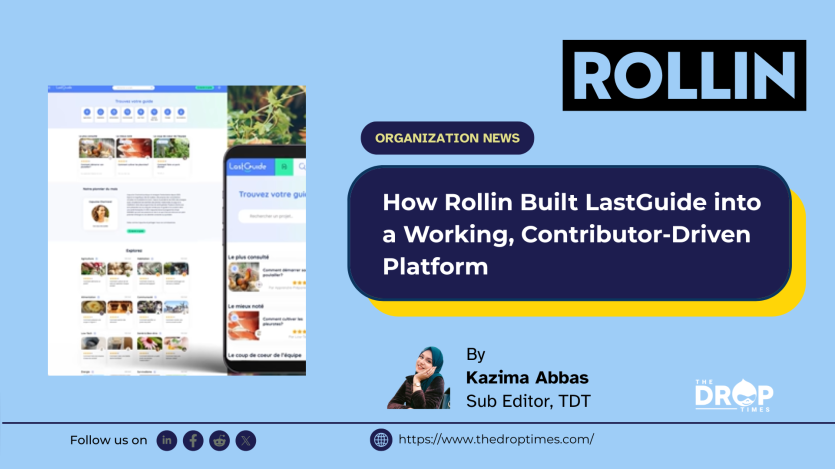
Some projects are built to solve a specific problem. Others, like LastGuide, are built to support a much broader purpose. Developed by Rollin in close collaboration with their client, LastGuide is a platform designed to help people live more independently. It brings together thousands of clear, practical guides focused on self-sufficiency, ecology, mutual aid, and everyday skills. The idea is to make useful knowledge easy to access and easier to share.
For Rollin, this was not just another project. The Montreal-based team works closely with partners across Canada and the US to build tailored digital platforms, often for agencies and media teams working with major brands. Their approach is focused and hands-on, which was a strong fit for a project like LastGuide that required both technical depth and long-term vision.
The platform itself was originally built on Drupal 8 and has since been upgraded to Drupal 10. This shift brought in stronger performance, better security, and room to evolve. To understand how it all came together, from architecture to execution, The Drop Times reviewed the project through answers provided by Samuel Rollin, CEO of Rollin, who described the process behind building LastGuide.
Turning Vision into Platform: How Rollin Brought LastGuide to Life
When we asked Rollin how they translated their client's values into something functional, Samuel described a process that began with clarity of purpose and moved quickly into system design. The client already had a strong mission: build a tool for open knowledge sharing. What they needed was the right way to bring that to life.
Samuel explained that the vision resembled a kind of.
"social media platform, but for practical guides - complete with comments and reviews on each guide."
With that in mind, the team made a key early decision: open contribution over centralised control. The platform allows anyone to submit a guide, but layers in community tools like commenting, liking, and reviewing to surface the most useful content.
Rather than structure the content around abstract categories, Rollin grounded the site in practical areas like agriculture, health, and food preparation. This decision shaped more than just the UI; it impacted the platform's database and URL design, leading to logical paths like /fr/agriculture/.
To ensure a consistent user experience, Rollin developed a standardised content format that all guides follow: an introduction, step-by-step instructions, and disclaimers. These elements are enforced through paragraph-based blocks within Drupal, allowing for uniformity without stifling the contributor's voice.
Samuel noted,
"Every guide follows the same pattern - introduction, steps, disclaimers - which creates consistency without stifling individual voices."
Content quality is handled through a submission and approval flow that guides contributors through formatting while hiding technical complexity. Once a guide is approved, it's the social tools, likes, comments, and reviews. that take over and help users find what's useful.
On the discovery side, the site supports both focused searching and casual browsing. Search and filtering were deliberately designed to reflect how people actually use this type of content. Samuel said,
"You can dig deep when you know what you want, or just explore when you're curious - and the likes and reviews help surface the most valuable content naturally."
Navigating Complexity Without Bloat
In a follow-up, we asked Samuel how they tackled the technical complexity behind such a flexible system. With features like advanced filtering, layered permissions, and editorial workflows, the risk of creating a bloated or fragile system is always high.
He emphasised that while much of the platform rests on standard Drupal tools like Content Moderation, role permissions, and Views, they quickly hit limits, especially around guide structure and performance.
One of the more difficult issues was building a flexible content model that could accommodate highly varied guides. Some guides need lists of tools, others need ingredient quantities, safety tips, or timing estimates. Rather than create dozens of content types, Rollin built a single adaptable one that could handle multiple formats without excess fields.
Filtering was another challenge. The platform needed to filter across taxonomies, custom fields, and entity references without slowing down performance. Samuel explained that Drupal's Views module wasn't sufficient at scale, so they brought in Solr to handle the search layer.
"Performance hit us hard with the filtering system... That's where we brought in Solr for search and filtering - it handles complex queries much better than trying to make MySQL do everything."
Rollin's background in Symfony proved valuable. They wrote their custom modules using service containers and dependency injection rather than Drupal's legacy hook system. This helped keep the architecture modular and stable across core updates.
Samuel added,
"We structured the custom modules using service containers, dependency injection, and event dispatchers."
The permission system itself wasn't a technical obstacle, but a matter of mapping the client's editorial process to a logical workflow. Once that was understood, Drupal's role-based system handled the job with minimal customisation.
Upgrading in Parallel
At one point in the conversation, we asked Samuel about the migration process, specifically, how they managed to upgrade from Drupal 8 to Drupal 10 without taking the platform offline.
He walked us through their methodical, staged process. First, they migrated from Drupal 8 to 9, and only after stabilising that move did they continue to Drupal 10.
"We actually did this in two stages - D8 to D9 first, then D9 to D10."
The key to this success was using parallel environments. Being a Platform.sh partner, Rollin spun up dedicated test environments to handle upgrades without affecting the live system.
Samuel shared,
"The key was using parallel environments so the live site never went down or got affected by our upgrade work."
Throughout the process, they used automated workflows with GitHub Actions to validate code, dependencies, and security updates before pushing anything live. Compatibility with contrib and custom modules took up most of their time.
"Module compatibility ate up most of our time. Several contrib modules needed D10 versions, and our custom modules had to be updated for Symfony 6."
Before final cutover, they validated every piece of content structure, from custom fields to taxonomies, to prevent data loss. Once that was done, the handoff to the new system was smooth, with backup and rollback plans tested in advance.
Their main takeaway for other teams planning a similar migration? Stick to stable processes, plan for fallbacks, and don't overcomplicate the move.
"Good staging practices and rollback planning matter more than fancy techniques."
A System Built to Last
To wrap up the conversation, we asked how LastGuide reflects Rollin's broader philosophy when it comes to long-term, scalable platform development.
Samuel's answer was simple: plan first, build with the future in mind, and choose proven tools that solve real problems.
"Success starts with planning. When you're building systems that will handle thousands of nodes and pages, the core element is having a clear overview of what needs to be done and what success looks like for the client."
From caching with Redis, to scalable query patterns, to API-ready architecture, Rollin designed the platform to grow with its user base.
"The code architecture, or the content structure, doesn't need architectural changes whether you have 100 guides or 10,000."
Operational independence was another priority. Rollin set up systems so that backups, monitoring, and deployments could happen without developer involvement. This ensures clients aren't dependent on the original build team to keep things running.
Their approach is grounded in practicality. No unnecessary tools, no trends for trend's sake.
"Our approach is to use proven tools to solve real problems efficiently instead of chasing shiny new technologies."
LastGuide shows what can happen when a clear mission meets careful execution. From its open contribution model to the technical foundation that supports growth, the platform reflects Rollin's way of building systems that are both practical and durable.
We would like to thank Marianne Boutet, Project Manager at Rollin, for providing us with all the information we needed to bring this story together.
 Kazima AbbasKazima Abbas is a sub-editor at The Drop Times
ASK: Drupal Community Needs Your Support
View all →
Note: The vision of this web portal is to help promote news and stories around the Drupal community and promote and celebrate the people and organizations in the community. We strive to create and distribute our content based on these content policy. If you see any omission/variation on this please reach out to us at #thedroptimes channel on Drupal Slack and we will try to address the issue as best we can.

Related People


Related Organizations

You may also like