



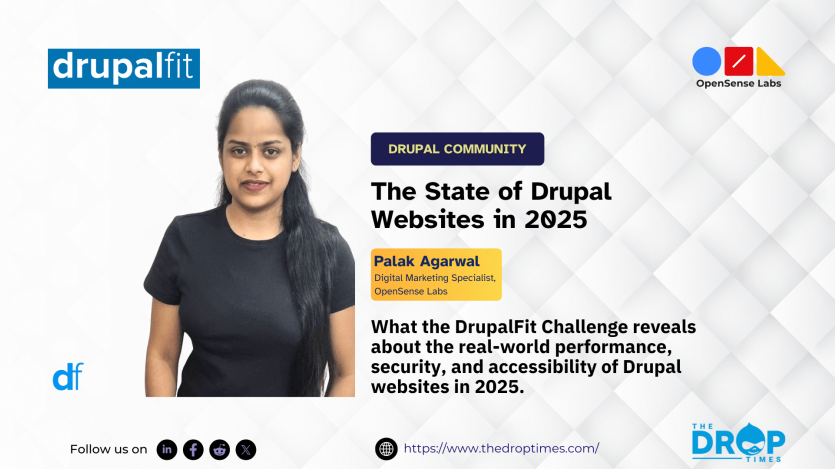
The State of Drupal Websites in 2025

Ahead of DrupalCon Vienna, we launched the DrupalFit Challenge – Vienna Edition ’25. It was a community contest that invited Drupal website owners to test the strength of their websites. The idea was simple: to check how well websites built on the Drupal CMS perform in five key areas—security, performance, accessibility, SEO, and domain health.
The response from the community was outstanding. We received many submissions, both online and at the DrupalCon Vienna venue. The level of participation demonstrated the eagerness of developers, agencies, and site owners to learn more about the quality of their websites.
You can read about the Drupal website winners of this contest here.
However, beyond the awards, the contest provided us with a clear view of how Drupal websites are performing. It showed where sites are doing well and where there is room for improvement. And, with the web changing faster than ever, we believe it is essential for developers, agencies, and site owners to understand what works, what doesn't, and where they should focus next.
So here we are! After reviewing all the entries, we compiled the data and insights that provide a clear picture of Drupal websites today. Here’s the Drupal Website Audit Report 2025.
Drupal Websites Report 2025
(Based on the insights from the challenge)
We audited 148 Drupal websites using our tool DrupalFit. The website audit tool measures websites across four main areas—Accessibility, Security, SEO, and Performance—along with a domain check.
We divided our findings into four sections:
- By Overall Health
- By Performance
- By Security
- By SEO
By Overall Health
Out of the 148 websites built on the Drupal CMS that we tested, here’s what we found:
| Category | Websites Affected | % of Total |
|---|---|---|
| Accessibility Issues | 125 | 84.5% |
| Security Issues | 98 | 66.2% |
| SEO Issues | 104 | 70.3% |
| Performance Issues | 123 | 83.1% |
| Scored Well (Score > 95) | 105 | 70.9% |

A total of 125 websites (84.5%) had accessibility issues. This means most sites can improve their user experience for people with disabilities.
98 websites (66.2%) had some kind of security problem. These include outdated modules, missing HTTPS, or exposed configuration data.
104 websites (70.3%) had SEO issues like missing meta descriptions, non-descriptive link text, or weak heading structures. These issues impact how easily users can locate websites on search engines.
123 websites (83.1%) experienced performance issues, including slow page loading, layout shifts, or prolonged blocking times.
The good news is that 105 websites (70.9%) scored above 95, which indicates that many Drupal sites are still adhering to good web practices in at least one or more areas.
By Performance
Out of the 148 websites, 123 websites had one or more performance issues. The main website performance metrics we tracked are listed below.
| Metric | Websites Affected | Ideal Threshold |
|---|---|---|
| Largest Contentful Paint (LCP) above ideal (~2.5 s) | 32 | ≤ 2.5 s |
| First Contentful Paint (FCP) above ideal (~1.8 s) | 2 | ≤ 1.8 s |
| Total Blocking Time (TBT) above ideal (~200 ms) | 48 | ≤ 200 ms |
| Cumulative Layout Shift (CLS) above ideal (~0.1) | 20 | ≤ 0.1 |
| Speed Index (SI) above ideal (~3.4 s) | 11 | ≤ 3.4 s |
Most website performance issues came from high LCP and high TBT values.
- LCP (Largest Contentful Paint) measures how long it takes for the main content to appear.
- TBT (Total Blocking Time) indicates the duration during which the main thread is blocked, preventing users from interacting with the page.
High numbers in these areas mean slow loading and poor user experience. To improve these numbers, websites can optimize images, reduce heavy scripts, and use caching more effectively.
By Security
From a security perspective, 98 websites had one or more issues. Out of these, 24 websites had at least one critical or high-risk vulnerability that needs quick attention. Without addressing these issues, websites remain vulnerable to attacks and data leaks.
Some common website issues we found were outdated Drupal core versions, missing HTTPS setup, and weak security headers. These problems put user data at risk and impact the site's trustworthiness.
By SEO
When we looked at Drupal SEO, 104 websites had one or more issues. The two most common problems were:
- Missing meta descriptions
- Non-descriptive or repetitive link text
These issues make it harder for search engines to understand the content and for users to find what they need. In short, they can affect where a website appears in search results.
Wrapping Up
The DrupalFit Challenge – Vienna Edition 2025 provided us with a valuable insight into the current performance of Drupal websites. Many sites showed strong results, but there are still clear areas that need attention.
Accessibility (84.5%) and Performance (83.1%) continue to be the most common challenges across the websites we reviewed.
To move forward, teams should focus on:
- Improving LCP and TBT to create faster, smoother user experiences.
- Fixing missing meta descriptions and weak link text to strengthen SEO and visibility.
- Addressing critical security issues without delay to keep data safe and maintain trust.
Regular audits, updates, and attention to detail can help keep Drupal websites fast, secure, and user-friendly.
If you want to check your website’s performance, visit drupalfit.com and run a free site audit. You’ll receive a comprehensive report detailing your site's current status and outlining the necessary steps to improve it.
 Palak AgarwalLoves turning the ‘wait, what does that even mean?’ kind of tech talk into ‘oh, that makes sense!’ moments.

ASK: Drupal Community Needs Your Support
View all →
Note: The vision of this web portal is to help promote news and stories around the Drupal community and promote and celebrate the people and organizations in the community. We strive to create and distribute our content based on these content policy. If you see any omission/variation on this please reach out to us at #thedroptimes channel on Drupal Slack and we will try to address the issue as best we can.

Related Events



Related Organizations


You may also like