



Dries Buytaert: Why Agencies Must Evolve Beyond Technical Execution

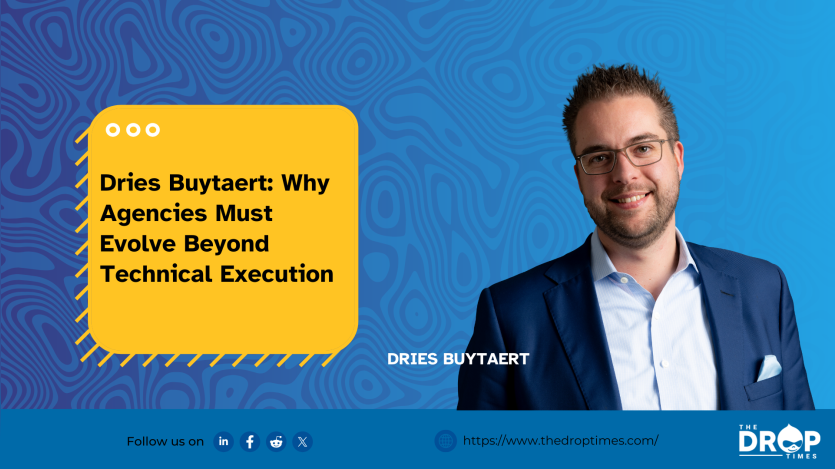
Dries Buytaert, founder of Drupal, recently shared his perspective on how AI is changing the work of digital agencies. He notes that AI is not only accelerating development processes but also shifting expectations around how agencies operate and deliver value.
While he acknowledges that current economic pressures, such as inflation and cautious client spending, are affecting many agencies, he points to a more significant shift underway: the long-term impact of AI on the industry. As tasks like coding and content creation become increasingly automated, agencies may need to reassess their role. Dries suggests that focusing on strategic direction, orchestration, and measurable outcomes could become more important than billing for time or technical execution alone.
He draws a comparison to earlier periods of technological change, where automation altered how work was structured. In this case, AI could lead agencies to reconsider bundled service models. Instead of offering end-to-end solutions, agencies may find more value in areas that require human oversight, such as accountability, consulting, domain-specific expertise, and integration across systems.
Dries also points out that while AI can improve efficiency, it cannot replace the need for human judgment, especially when it comes to setting goals, ensuring quality, and accepting responsibility for outcomes. This “accountability gap” is an area where human involvement remains essential.
To help agencies navigate this shift, he outlines six approaches: using AI to support rather than replace teams, moving from time-based billing to value-based pricing, focusing on consultation, serving as an interface between AI and client needs, packaging repeatable solutions, and building systems to manage ongoing digital workflows.
He encourages agencies to consider how they want to respond, whether by adapting their models or reinforcing existing practices. He also highlights that open-source platforms like Drupal are positioned differently from proprietary platforms. Since Drupal depends on a strong agency ecosystem, it has incentives to support rather than replace agency work.
Ultimately, his message is that this isn’t just about adopting AI tools. It’s about understanding how the nature of agency work is changing and deciding how to remain relevant as those changes continue.
ASK: Drupal Community Needs Your Support
View all →
Disclosure: This content is produced with the assistance of AI.
Note: The vision of this web portal is to help promote news and stories around the Drupal community and promote and celebrate the people and organizations in the community. We strive to create and distribute our content based on these content policy. If you see any omission/variation on this please reach out to us at #thedroptimes channel on Drupal Slack and we will try to address the issue as best we can.

Related People


You may also like