



Dries Buytaert on Solving the Maker-Taker Imbalance in Open Source

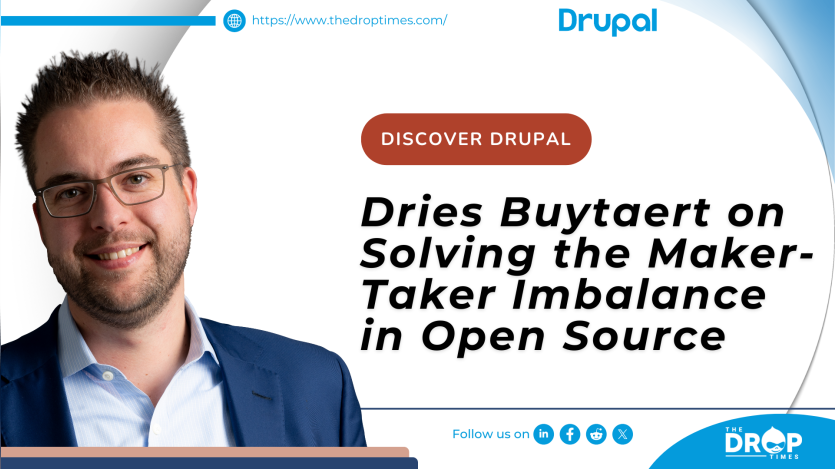
Dries Buytaert, founder and Project Lead of Drupal, recently weighed in on a growing issue in the open-source community: the imbalance between contributors ("Makers") and those who profit without giving back ("Takers"). Though inspired by the public dispute between WordPress co-founder Matt Mullenweg and WP Engine, his comments ddress a broader problem that threatens the sustainability of open-source projects.
Dries explains that Takers, who focus solely on their profits without contributing to the open-source software they rely on, can undermine the community.
"An aggressive Taker can induce Makers to behave in a more selfish manner and reduce or stop their contributions,"
he warns. This imbalance, if left unchecked, could deter innovation and harm the long-term growth of open-source ecosystems.
To combat this, Drupal developed a Contribution Credit System, which incentivizes organizations to contribute by giving them visibility and recognition based on their contributions.
"When a customer selects a Maker, part of their revenue is reinvested into the project,"
Dries writes, contrasting it with Takers who drain resources without supporting the project's development. The system tracks various types of contributions—such as code, financial support, and community involvement—and rewards Makers with increased visibility on Drupal.org and preferential placement at events like DrupalCon.
Dries believes this model could offer valuable lessons for WordPress, suggesting that a similar credit system would help balance contributions and promote fairness. WordPress's "Five for the Future" initiative, which encourages organizations to contribute 5% of their resources to the platform, is a step in the right direction, but Dries argues that a more structured credit system could go further in ensuring that contributions are valued and rewarded.
In conclusion, Dries advocates for more transparent and incentivizing mechanisms within open-source communities.
"By transparently rewarding contributions and fostering collaboration, we can build healthier open source ecosystems,"
he writes, urging other projects to consider models like Drupal's as a way to balance the needs of Makers and Takers and ensure long-term sustainability.
Image Attribution Disclaimer: At The Drop Times (TDT), we are committed to properly crediting photographers whose images appear in our content. Many of the images we use come from event organizers, interviewees, or publicly shared galleries under CC BY-SA licenses. However, some images may come from personal collections where metadata is lost, making proper attribution challenging.
Our purpose in using these images is to highlight Drupal, its events, and its contributors—not for commercial gain. If you recognize an image on our platform that is uncredited or incorrectly attributed, we encourage you to reach out to us at #thedroptimes channel on Drupal Slack.
We value the work of visual storytellers and appreciate your help in ensuring fair attribution. Thank you for supporting open-source collaboration!
ASK: Drupal Community Needs Your Support
View all →
Note: The vision of this web portal is to help promote news and stories around the Drupal community and promote and celebrate the people and organizations in the community. We strive to create and distribute our content based on these content policy. If you see any omission/variation on this please reach out to us at #thedroptimes channel on Drupal Slack and we will try to address the issue as best we can.
Related People


You may also like