



Tag1 Explains the Mechanics of Large Language Models in New White Paper

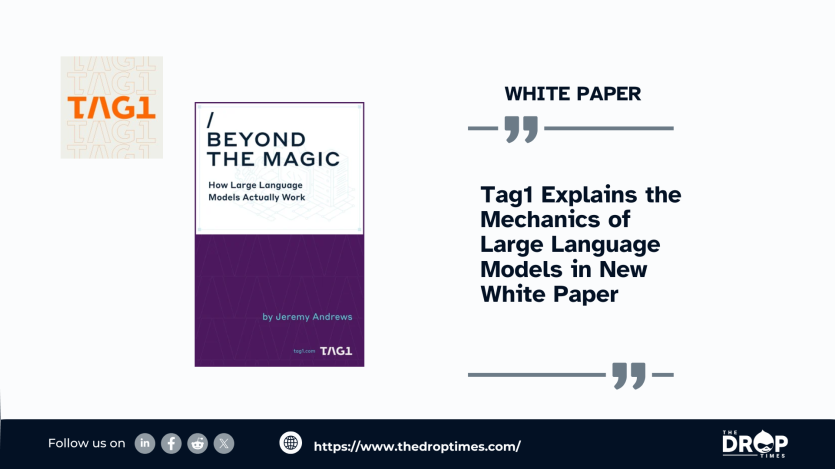
Tag1 has published a new white paper that breaks down how large language models function, offering an approachable look into the systems powering today’s AI tools.
Written by Founding Partner and CEO Jeremy Andrews, the white paper is designed to clarify how LLMs operate, without relying on buzzwords or hype. The guide covers how language models process words through layered architecture, how predictive training at scale creates seemingly intelligent behavior, and why these systems, while powerful, still produce inaccurate or fabricated outputs. By comparing model architecture to a massive parallel factory and explaining the mathematics behind prediction, the paper makes complex topics digestible for non-experts.
Jeremy also provides insight into real-world applications, showing how developers can use LLMs to accelerate problem-solving and innovation. Tag1 positions the document as a resource for those shaping AI strategy or simply seeking a grounded explanation of how these technologies work. The paper emphasizes that the intelligence observed in LLMs is not magic, but an emergent result of architecture, data, and training scale, all grounded in mathematical principles. Readers can download the full white paper in PDF format from Tag1’s website for reference or sharing across teams.
To access the full white paper, visit https://tag1consulting-5146931.hs-sites.com/white-paper-how-llms-actually-work


ASK: Drupal Community Needs Your Support
View all →
Note: The vision of this web portal is to help promote news and stories around the Drupal community and promote and celebrate the people and organizations in the community. We strive to create and distribute our content based on these content policy. If you see any omission/variation on this please reach out to us at #thedroptimes channel on Drupal Slack and we will try to address the issue as best we can.

Related Organizations

Related People


You may also like