



30 Drupal AI Framework and Integration Modules You Should Know

The Drupal ecosystem is entering a new phase where artificial intelligence is no longer an experimental add-on but a core capability. As expectations grow for smarter automation, dynamic content, and conversational interfaces, Drupal is rising to meet the challenge. It is no longer just a content management system. It is evolving into a powerful orchestrator of AI services and LLM models, enabling smarter, more adaptive digital experiences. This evolution is not about hype. It is about making Drupal more adaptive, more intelligent, and more useful in real-world digital experiences.
Modules under the "AI Frameworks and Integration" category are leading this charge. These tools give developers and site builders the ability to connect with AI providers, build custom workflows, and manage content pipelines without being locked into a single vendor. They provide abstraction layers, orchestration tools, chatbot frameworks, and even local AI deployment options. This is about making AI practical inside Drupal, without sacrificing flexibility or control.
1. AI

The Drupal AI module offers a comprehensive framework for integrating various AI technologies into Drupal sites. It supports multiple AI vendors, including OpenAI and Anthropic, and provides an abstraction layer for seamless integration. The module includes submodules for text generation, image creation, content analysis, and more, allowing site builders to implement AI features without extensive coding. Developers benefit from its flexibility and ease of integration, while administrators can enable AI-powered functionalities with minimal effort. The module also supports AI orchestration, enabling complex workflows and AI system chaining, akin to a search API for AI.
2. Model Context Protocol (MCP)
The Model Context Protocol (MCP) module for Drupal enables the platform to function as a compliant MCP server, allowing large language model (LLM) applications to dynamically extend their context with local and remote data. Leveraging Drupal's content management capabilities and modular architecture, this module facilitates the exposure of content as resources and integrates AI functionalities to create customized workflows. Upon installation and configuration, any Drupal site can serve as an MCP-capable endpoint, enhancing its interoperability with LLM applications.
3. ECA: Event - Condition - Action

ECA is a no-code rules engine for Drupal, designed to automate site processes through event-condition-action (ECA) models. It integrates with BPMN.iO for graphical modeling, allowing users to define conditional actions triggered by Drupal events. ECA leverages Drupal core components and offers a plugin manager for extensible events, conditions, and actions. Models are stored in configuration, facilitating import/export via the admin UI or Drush. The module supports a range of features including caching, logging, and integration with other Drupal modules, enhancing site automation and management.
4. Modeler API
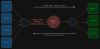
The Modeler API serves as an intermediary framework within Drupal, facilitating seamless interaction between modules with complex configuration entities, known as Model Owners, and UI modules, referred to as Modelers. It enables these components to utilize diagramming tools like BPMN.iO for constructing and managing configurations without direct dependencies. The API provides essential infrastructure, including dynamic routing, permission control, and logging, while supporting import/export functionalities. This modular approach allows developers to integrate new modelers or model owners efficiently, enhancing flexibility and reducing redundancy in UI development.
5. AI Agents Test
The AI Agent Test module for Drupal facilitates rigorous testing of AI agents by allowing developers to repeatedly evaluate decision-making processes using consistent input contexts across various provider and model combinations. This module addresses the challenge of biased testing environments by enabling the creation of comprehensive test suites that simulate real-world user interactions, ensuring agents are production-ready. It provides a framework for validating agent performance against actual prompts, enhancing reliability and effectiveness in deployment.
6. AI Drush Agents
The AI Drush Agents module enhances Drupal's Drush command-line tool by integrating a suite of AI-driven agents. It facilitates interaction with these agents through new commands such as agents:run for engaging with any installed agent, and agents:config_export_explain for clarifying pending configuration changes. This module requires prior setup of the AI Agents module and aims to streamline agent management and improve user interaction within the Drush environment.
7. Langfuse
LangFuse is a Drupal module that provides comprehensive AI observability and analytics by integrating with the LangFuse PHP SDK. It offers zero-configuration AI tracking, automatically capturing interactions within AI modules. The module supports unified request tracing, grouping multiple AI operations into a single trace, and delivers detailed analytics on token usage, response times, and model performance. It supports various authentication methods, including API key pairs and bearer tokens, and is optimized for production with error handling and caching. Designed for developers, it features rich debugging information and an extensible architecture, requiring Drupal 10.x or 11.x and PHP 8.1 or higher.
8. OpenAI Provider

The OpenAI module for Drupal integrates advanced AI capabilities, enabling developers to utilize models such as GPT-4, DALL-E, and Whisper for text generation, image creation, and speech-to-text functionalities. It requires an API key setup via the Key module, facilitating seamless interaction with OpenAI's services. This module is part of the AI module family, enhancing Drupal's functionality with state-of-the-art AI tools.
9. OpenAI Batch
The OpenAI Batch module for Drupal serves as a wrapper for OpenAI's Batch API, facilitating bulk asynchronous requests to the service. This module is designed to reduce costs associated with processing large volumes of data by leveraging OpenAI's Batch service. It provides a framework for developers to create custom plugins, requiring the implementation of an OpenAiBatchProcessor plugin within a custom module. By extending OpenAiBatchProcessorPluginBase and implementing OpenAiBatchVBOActionInterface, users can execute batch operations on selected content entities, sending them to ChatGPT for processing. The module integrates with Drupal's cron to download and parse responses, enabling use cases such as content summarization and taxonomy tagging. Dependencies include the Drupal AI module and ai_provider_openai.
10. Anthropic Provider

The Anthropic module integrates Claude series AI models into Drupal, enabling advanced text generation and conversational capabilities. It leverages the AI module family to enhance content processing and intelligent interaction flows. Users must configure an API key via the Key module to connect with Anthropic's services, facilitating seamless integration for Drupal developers seeking ethical and high-performance AI solutions.
11. LiteLLM AI Provider
LiteLLM is a developing module designed to integrate AI provider capabilities into Drupal. It aims to facilitate the use of language models within Drupal sites, enhancing content management and user interaction through AI-driven functionalities. This module is particularly valuable for developers seeking to incorporate advanced AI features into their Drupal projects.
12. Gemini Provider

The Gemini Provider module integrates Google Gemini with Drupal's AI ecosystem through the AI module's abstraction layer. It enables developers to configure Gemini authentication, manage API keys via the Key module, and access Gemini in the AI module's provider settings. The module implements plugins for text generation, image generation, and embeddings, making Gemini accessible for use within Drupal's AI-driven workflows.
13. amazee.ai AI Provider

The amazee.ai AI Provider module integrates amazee.ai's AI services into Drupal, offering seamless AI functionalities such as text generation and translation. It connects Drupal's AI module ecosystem with amazee.ai's capabilities, providing access to large language models and vector databases. The module features configurable settings for API credentials, supports various AI operations, and includes a configuration recipe for automated setup. It ensures data sovereignty with regional processing options and integrates with existing hosting providers without requiring migration. The module requires Drupal Core 10.3 or 11, the core AI module, and a valid amazee.ai account.
14. Microsoft Azure AI

The Azure Provider module integrates Azure AI Studio capabilities into Drupal, allowing developers to utilize AI features such as Chat, Embeddings, and Text-To-Image. It supports secure and compliant deployment of OpenAI and other models like Llama and Cohere within Azure's infrastructure. Users can set up AI models in their preferred regions and networks, leveraging a pay-as-you-go model. Installation involves configuring Azure AI Hub and deploying models, which are then connected to Drupal via API keys. This module requires the AI module and is sponsored by Aalto University to promote secure AI usage.
15. Ollama Provider

Ollama serves as a headless server solution for running local AI models within Drupal environments. Integrated with the AI module, it facilitates efficient management and execution of AI models on user-controlled infrastructure, eliminating the need for a graphical interface. This setup is particularly beneficial for developers seeking to operate in production environments where control and scalability are prioritized. Configuration involves setting up an API key via the Key module and specifying server details, enabling seamless model execution.
16. Augmentor AI

Augmentor is an AI framework for Drupal that facilitates the integration of various AI services, including GPT-3, ChatGPT, and Google Cloud Vision, into Drupal sites. It offers a pluggable ecosystem for managing AI services and features integration with CKEditor 4/5, providing a dropdown for selecting augmentors. The module supports different field widgets, allowing users to manage single or multiple response values from AI executions. It also enables multi-target field alterations, mapping AI responses to multiple fields. Augmentor includes a demo submodule for developers and requires configuration of user permissions for managing augmentors.
17. DeepSeek Provider

DeepSeek Provider integrates DeepSeek's Large Language Model (LLM) with Drupal's AI module, enabling advanced language processing capabilities within Drupal sites. After installation via Composer and configuration with an API key, developers can leverage DeepSeek's LLM features through any component utilizing the AI module. This integration expands Drupal's AI functionalities, offering enhanced language-based solutions for site builders.
18. Groq Provider

The Groq module for Drupal integrates with the AI module to provide rapid AI inference capabilities, enabling faster text generation than traditional PHP processing. It supports models such as Llama, Mistral, and Gemma, with future plans to include text-to-speech functionalities. Users can configure the module by setting up an API key through the key module and connecting it via the administrative interface. This module requires the AI module and offers community documentation for further guidance.
19. Mistral Provider

The Mistral module integrates European AI capabilities into Drupal, enabling text generation using models such as mistral-large-latest and mistral-embed. It functions within the AI module ecosystem, requiring an API key setup via the key module. Configuration is managed through the Drupal admin interface, facilitating seamless AI integration for developers. Community documentation supports implementation and usage.
20. Hugging Face Provider

The Hugging Face module for Drupal integrates with the AI module to provide access to a comprehensive library of over one million models, facilitating specialized tasks such as text and image classification. This integration allows Drupal developers to leverage advanced machine learning capabilities by connecting their Hugging Face account via an API key, enabling the creation of highly customized applications. The module requires the AI module and utilizes the Key module for API key management.
21. AWS Bedrock Provider

The AWS Bedrock Provider module integrates AWS Bedrock's comprehensive suite of AI models with the Drupal AI module, enabling Drupal users to leverage advanced text generation and image embedding capabilities. It supports models such as Claude, Amazon Titan, and Stable Diffusion, providing functionalities like text-to-image generation and multimodal embeddings. Authentication is managed through the Amazon Web Services module, allowing the use of profiles and assumed roles. This module requires the Drupal AI and Amazon Web Services modules and recommends using the Encrypt module for secure profile storage.
22. Google Vertex Provider

The Google Vertex provider module integrates with the AI module in Drupal, enabling the use of chat models from Google's Model Garden, including the Gemini model. It supports unique capabilities such as document and video inputs, and offers extensive token limits. To implement, users must configure the Google Vertex API within their Google Cloud account and set up necessary credentials in Drupal. This module is ideal for developers seeking advanced AI functionalities within their Drupal environment.
23. Fireworks AI
The Fireworks AI module serves as a provider for the AI module in Drupal, enabling integration with various AI models through the AI abstraction layer. It supports models such as Stable Diffusion XL, LLama 3 70B Instruct, and FireLlava 13-B, offering cost-effective alternatives for simple AI workflows. The module transitions previous AI Interpolator rules into the AI Automator Type, enhancing automation capabilities. After installation, configuration is accessible via the admin settings page.
24. vLLM Provider
The vLLM Provider module integrates vLLM with Drupal's AI capabilities, enabling seamless use of vLLM within Drupal sites. It requires the AI and Key modules for setup, allowing users to configure API keys, base URLs, models, and model types. This module facilitates enhanced AI functionalities for Drupal developers and site builders.
25. X Ai Provider

The X Ai Provider module integrates advanced AI capabilities into Drupal sites by connecting to X Ai's Grok services via the robust AI module framework. It enables features such as natural language processing, image recognition, and predictive analytics, enhancing user engagement and automating tasks. Designed for developers and site builders, the module supports models like grok-2-latest and grok-2-vision-1212, and operation types including chat and chat with image vision. Installation requires an API key setup through the Key module, facilitating a seamless connection to AI services.
26. YandexGPT Provider
YandexGPT is a Drupal module that integrates the YandexGPT large language model to enhance text processing, content generation, and conversational AI capabilities. It utilizes advanced algorithms to ensure ethical AI practices, providing safe and reliable solutions for Drupal applications. Users must configure an API key to connect with YandexGPT, enabling seamless integration into their AI workflows. The module requires the AI module and offers comprehensive community documentation for setup and use.
27. OpenRouter Provider

The OpenRouter AI Provider module for Drupal integrates over 300 language models into the platform, offering capabilities such as chat, completions, and embeddings. It dynamically updates model availability by querying OpenRouter's API, allowing site builders to access the latest models without manual updates. Administrators can curate model lists to streamline user interfaces and manage costs. The module supports integration with text formats, CKEditor AI, and custom automations, enhancing Drupal's AI functionalities. Installation requires the AI and Key modules, with configuration involving API key setup and model selection.
28. AnythingLLM Provider

The AnythingLLM Provider module integrates Drupal with Anything LLM, enabling the creation of AI-driven chat applications using data from a user's website. It supports various AI functionalities, including chat, CKEditor enhancements, translation, image alt text generation, and third-party integrations. The module leverages Anything LLM's API or OpenAI-compatible modes to facilitate embedding, search, and indexing capabilities. Future enhancements include expanded search API support and file indexing. This integration allows Drupal developers to implement AI features while maintaining data sovereignty.
29. Workers AI Provider
The Cloudflare Workers AI Integration for Drupal module enables seamless integration of Cloudflare Workers AI into Drupal websites, providing serverless AI capabilities for tasks such as text generation, image classification, and audio transcription. This module connects Drupal sites to Cloudflare's serverless platform, offering access to over 50 free AI models with automatic scaling and no infrastructure overhead. It features deep integration with Drupal via the AI module, allowing developers to utilize AI results programmatically through extendable hooks and services. The module requires Drupal 10.1 or higher, PHP 8.1+, and a valid Cloudflare account with API access.
30. Azure AI Services

The Azure AI Services module integrates Microsoft's Azure OpenAI and Translator Text APIs into Drupal, enabling developers to leverage AI capabilities such as content generation, summarization, and language translation. It provides a straightforward configuration interface for managing API keys and endpoints, serving as a backend service layer without direct end-user functionality. This module is designed for developers to incorporate advanced AI features into custom Drupal modules and applications.
 Alka ElizabethMy puns are intended.
Image Attribution Disclaimer: At The Drop Times (TDT), we are committed to properly crediting photographers whose images appear in our content. Many of the images we use come from event organizers, interviewees, or publicly shared galleries under CC BY-SA licenses. However, some images may come from personal collections where metadata is lost, making proper attribution challenging.
Our purpose in using these images is to highlight Drupal, its events, and its contributors—not for commercial gain. If you recognize an image on our platform that is uncredited or incorrectly attributed, we encourage you to reach out to us at #thedroptimes channel on Drupal Slack.
We value the work of visual storytellers and appreciate your help in ensuring fair attribution. Thank you for supporting open-source collaboration!

ASK: Drupal Community Needs Your Support
View all →
Note: The vision of this web portal is to help promote news and stories around the Drupal community and promote and celebrate the people and organizations in the community. We strive to create and distribute our content based on these content policy. If you see any omission/variation on this please reach out to us at #thedroptimes channel on Drupal Slack and we will try to address the issue as best we can.

Related Drupal Initiatives

You may also like